KEF LS LUXE: Wireless Hi-Fi Has Run Out of Excuses
Lossless streaming and modern network audio can deliver the whole recording without a sonic haircut. KEF’s $4,000 active speaker system puts the burden where it belongs: on the speaker.
Wireless hi-fi has spent years entering the room with an alibi. The stream was compressed. Wi-Fi was suspect. The amplifiers were too small. The speaker was only convenient. KEF’s new LS LUXE has decided to stop apologizing.
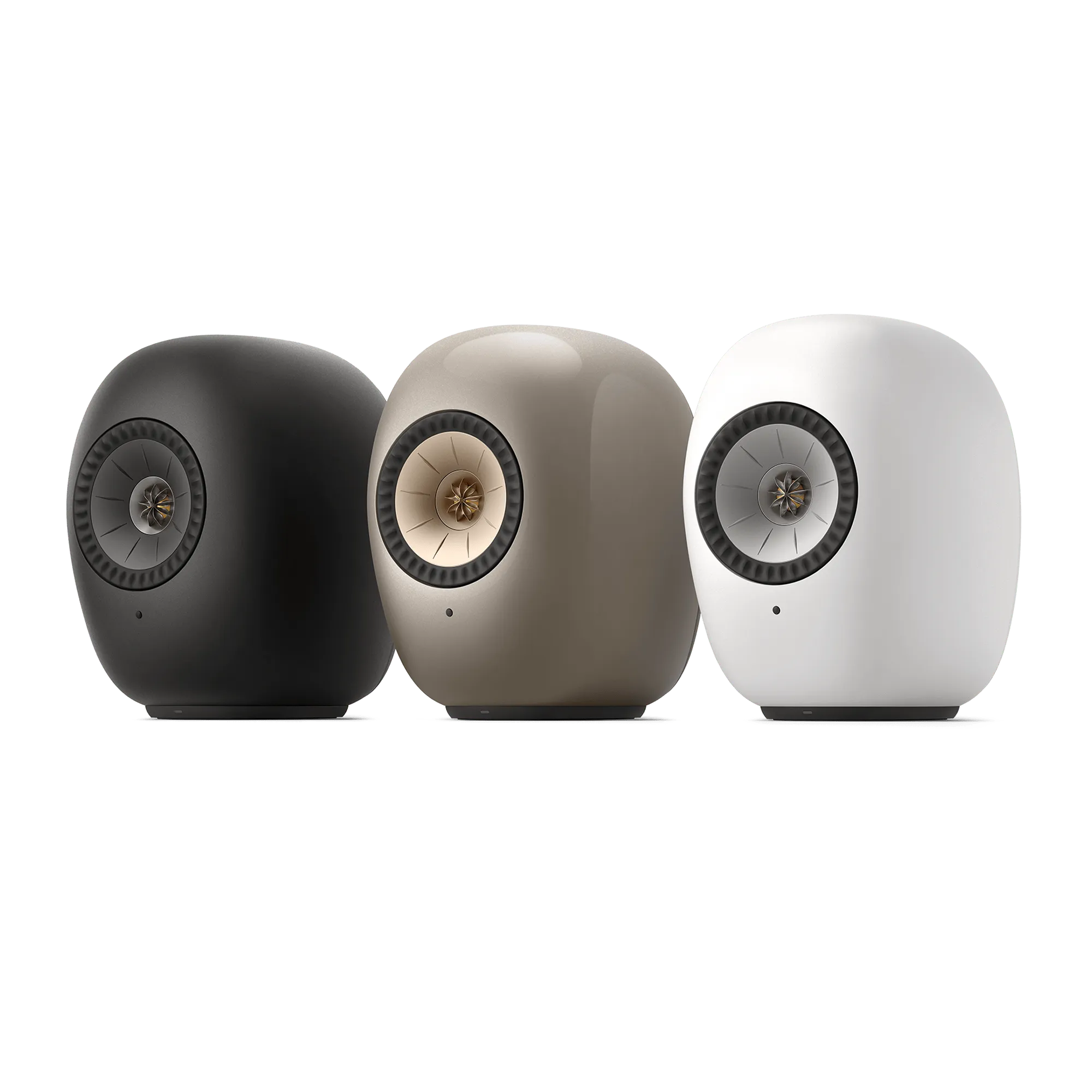
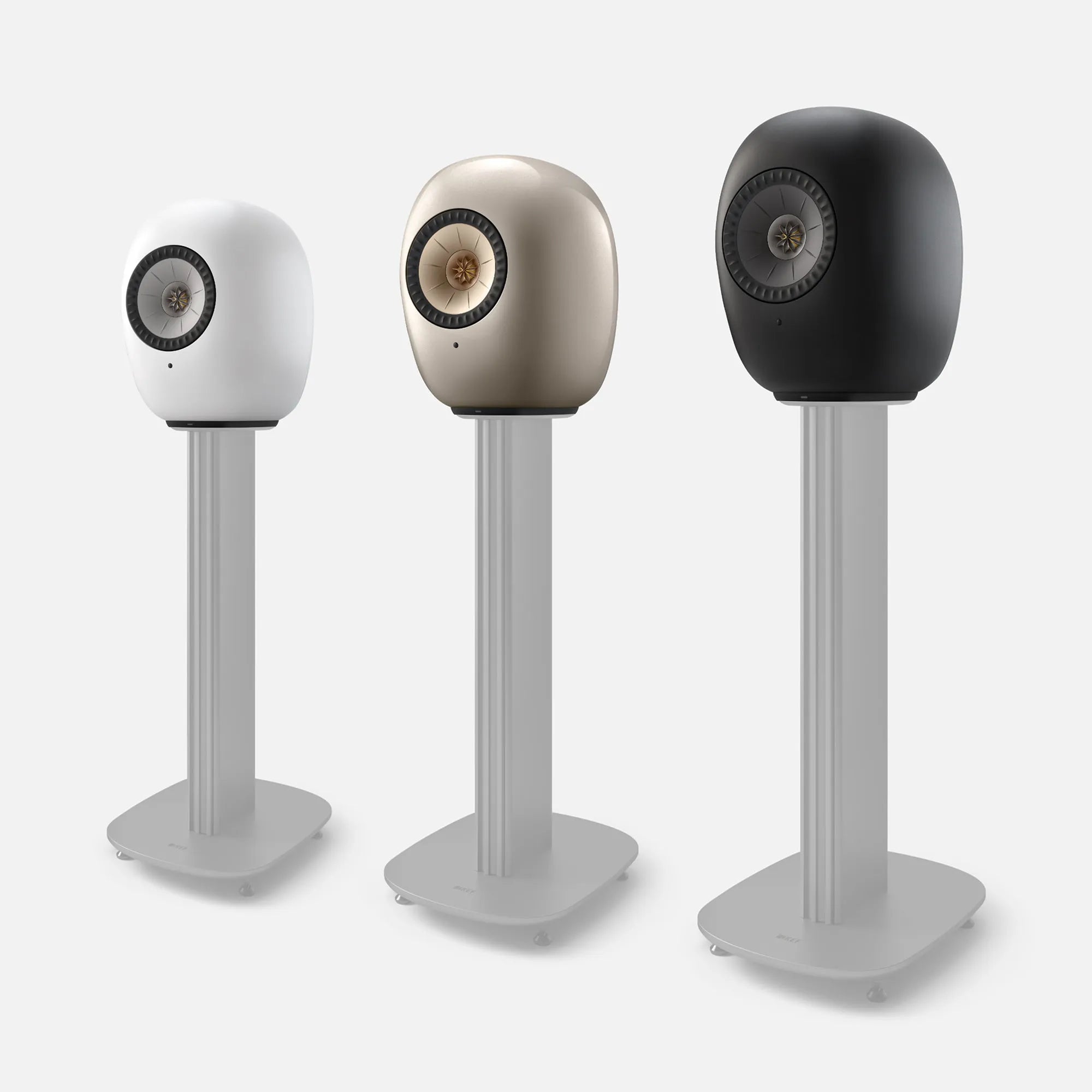
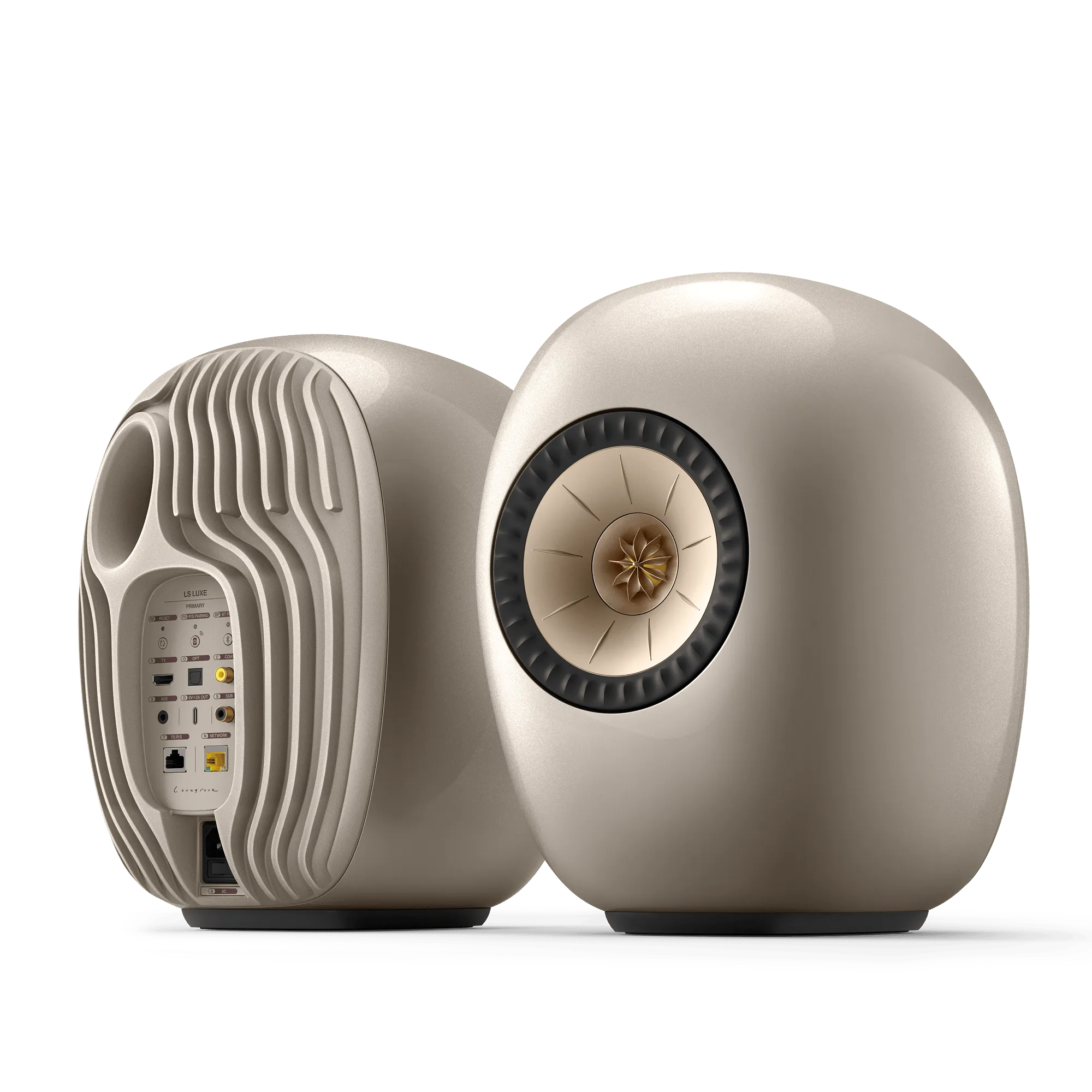
At $3,999.99 per pair, it also does not get to hide behind budget pricing. The sculptural active system, shaped by industrial designer Ross Lovegrove, lands between KEF’s $2,999.99 LS50 Wireless II and $5,999.99 LS60 Wireless. The matching S-LUXE stands add $799.99 per pair. That is serious money, but it buys considerably more than two cabinets and a pair of binding posts.
KEF LS LUXE at a glance
| Item | Detail |
|---|---|
| Price | $3,999.99 per pair; optional S-LUXE stands are $799.99 per pair |
| Drivers | 12th-generation 6.5-inch Uni-Q array; 1-inch aluminum-dome tweeter with MAT |
| Amplification | 280W Class D for LF/MF plus 100W Class AB for HF, per speaker; 760W total |
| Frequency response | 42 Hz–28 kHz, ±3 dB; 35 Hz–47 kHz, −6 dB; depends on EQ settings |
| Network audio | Up to 24-bit/384 kHz; lossless PCM plus DSD from compatible network sources |
| Interspeaker link | Wireless: all sources resampled to 24-bit/96 kHz PCM; cable: 24-bit/192 kHz PCM |
| Streaming | Spotify Connect, Tidal Connect, Qobuz Connect, AirPlay, Google Cast, Amazon Music, Deezer, UPnP and Bluetooth; Roon Ready is planned for 2027 |
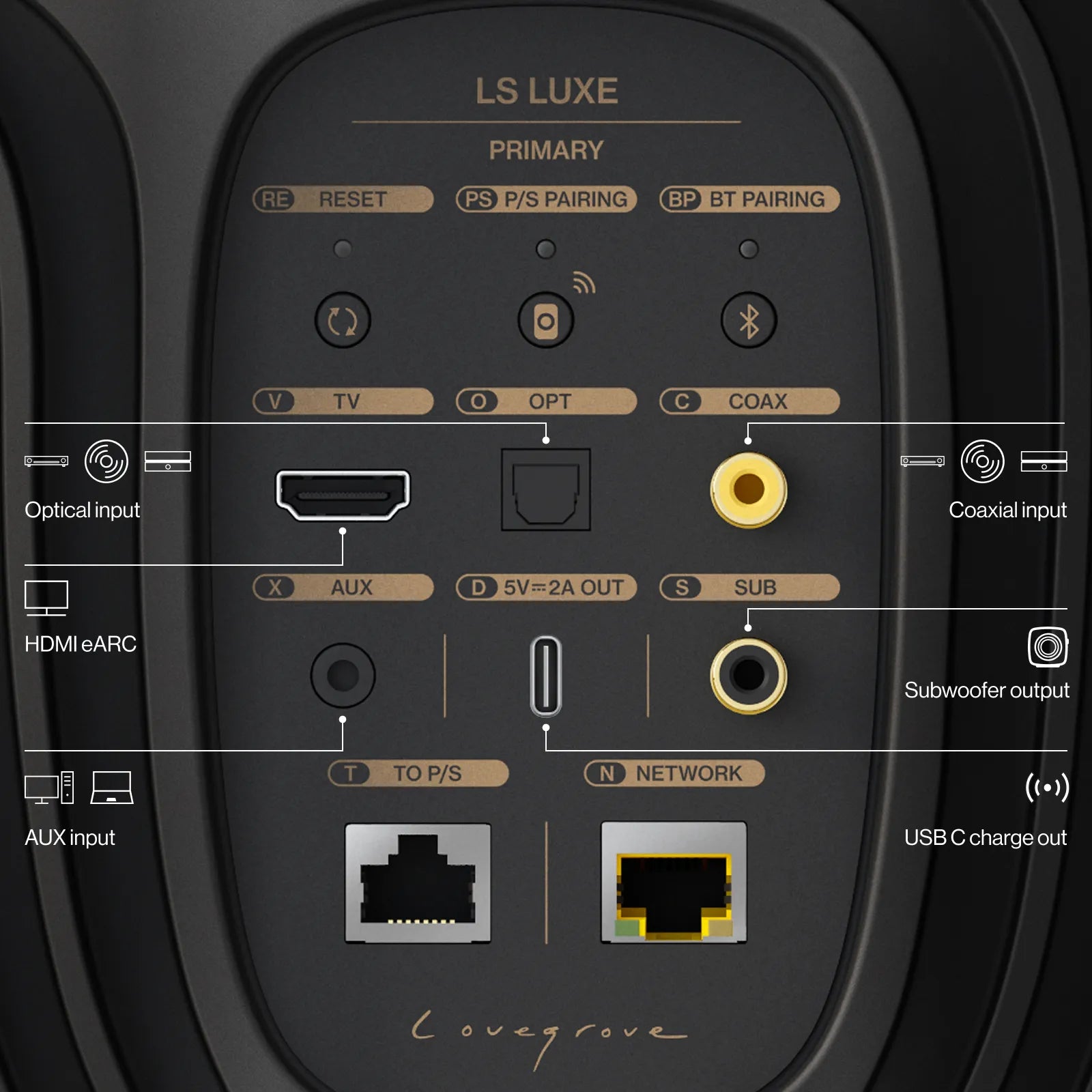
| Physical inputs | HDMI eARC, optical, coaxial, 3.5 mm analog and Ethernet; one subwoofer output per speaker |
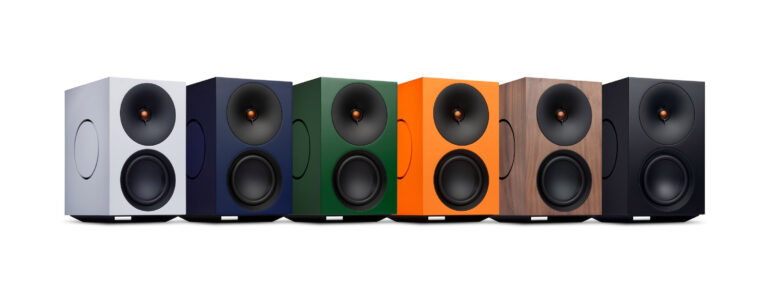
| Finishes | Dusk Titanium, Eclipse Black and Mineral White |
Wireless is not a synonym for lossy
Let’s kill a stubborn misconception: streaming and wireless do not intrinsically leave fidelity on the table. A lossless service can preserve every bit of the original audio data, while properly engineered network transport can deliver the byte stream intact. Wi-Fi moves data; it does not make a one arrive emotionally depleted.
There are caveats, because there are always caveats. Bluetooth codecs may be lossy. Some service tiers are lossy. AirPlay, Cast, an app, a device or a speaker can impose sample-rate limits or resample the signal. Network congestion can cause dropouts. Those are choices and implementation limits, not a mandatory sonic tax for removing a signal cable.
The LS LUXE makes the distinction unusually easy to see. Its network input accepts audio up to 24-bit/384 kHz. The separate link from the primary speaker to the secondary runs at 24-bit/96 kHz wirelessly, or 24-bit/192 kHz through the included interspeaker cable. So no, the fully wireless path is not bit-perfect at 384 kHz from end to end. It is also not a low-grade pipe: 24/96 comfortably covers the audible spectrum with ample resolution. If the highest number on the spec sheet matters to you, use the cable.
The larger point is the important one. Once a good master reaches the speaker without lossy compression, the audible result depends on what happens next: DSP, conversion, amplification, driver behavior, cabinet resonance, dispersion, placement and the room. The source is no longer an easy scapegoat. The speaker has to turn the file into convincing air pressure.
KEF gets the hard part
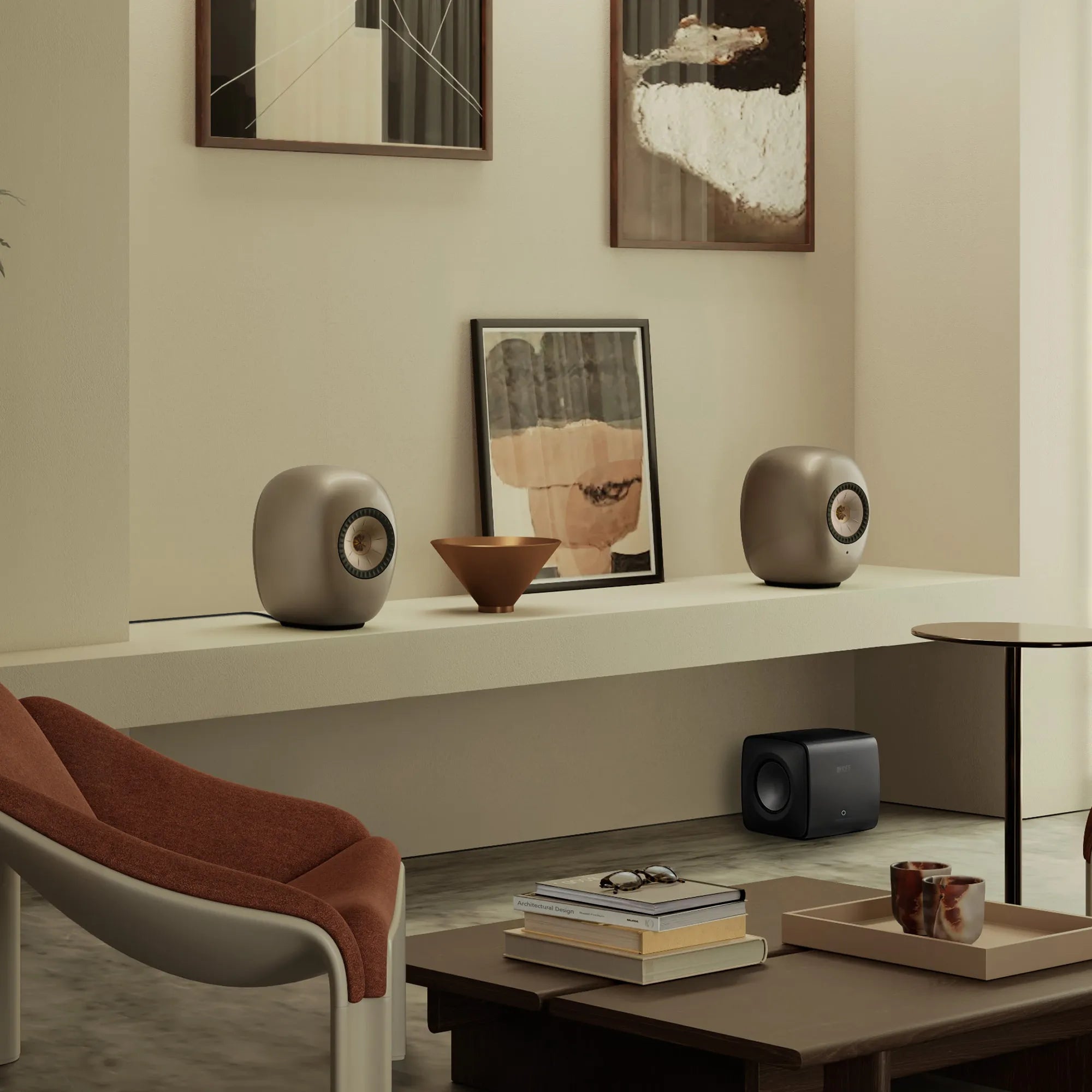
KEF’s reputation in exactly that department is rather excellent. The company has built its modern identity around driver integration, controlled dispersion, low-coloration cabinets and increasingly sophisticated active DSP. LS LUXE does not discard that playbook; it gives the playbook a larger driver, a more ambitious enclosure and a feedback loop.
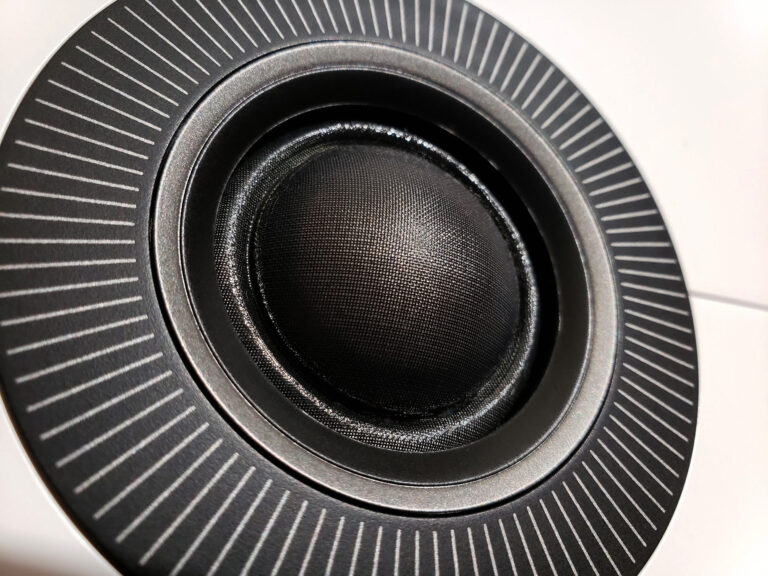
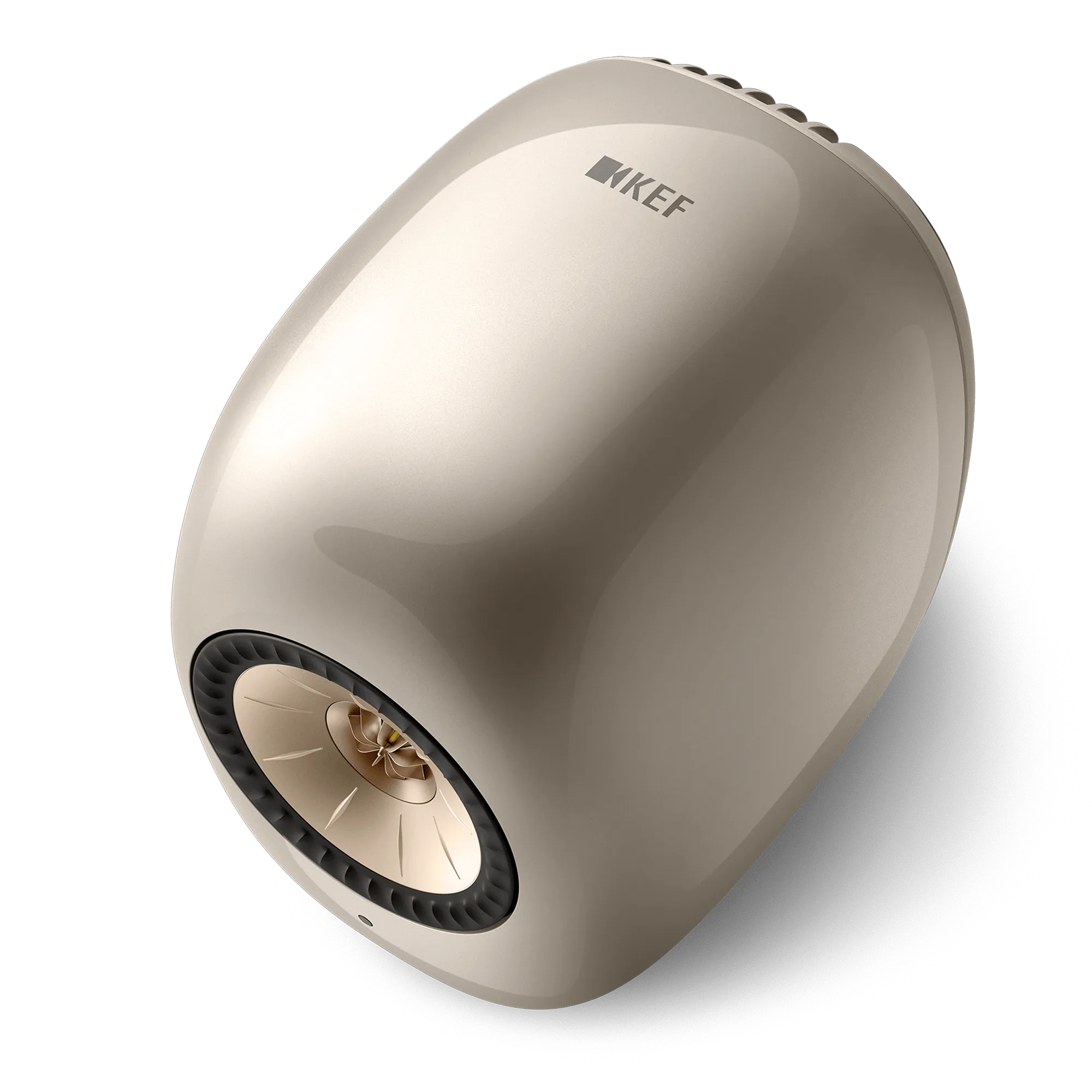
The 12th-generation Uni-Q array places a 1-inch tweeter at the acoustic center of a 6.5-inch mid/bass cone, aiming for consistent dispersion and a wider listening area. KEF’s Metamaterial Absorption Technology sits behind the tweeter and is claimed to absorb 99% of its unwanted rear radiation. The Uni-Q assembly is mechanically decoupled from the cabinet, while Lovegrove’s rounded bulk-molding-compound enclosure reduces sharp edges that can contribute to diffraction.
The useful context is in KEF’s R&D white paper, not merely the adjectives. KEF says the LS LUXE cabinet has roughly 50% more internal volume than the LS50, and its manufacturer measurements show about 8–10 dB more output below 40 Hz plus 6–14 dB lower total harmonic distortion through the bass and midrange in a level-matched comparison with the LS50 Wireless II. Those are KEF’s measurements, not ours, but they describe a meaningful engineering target rather than a new paint color.
The genuinely interesting addition is Velocity Control Technology, or VECO. A small electromagnetic sensor monitors the mid/bass voice coil’s actual motion and feeds that information back to a custom current-drive amplifier, which corrects deviations in real time. Put less formally: the amplifier does not merely tell the cone what to do; it checks whether the cone did it. KEF says the loop reduces low-frequency distortion, improves bass control and limits power compression.
Each enclosure contains a 280-watt Class D amplifier for the low/mid driver and a 100-watt Class AB amplifier for the tweeter. Across the pair, that is 760 watts, with the active crossover, driver protection and phase correction handled in DSP.
A complete system, not merely a pair of boxes
The W2 platform brings Spotify Connect, Tidal Connect, Qobuz Connect, AirPlay, Google Cast, Amazon Music, Deezer, UPnP and Bluetooth. Roon Ready certification is promised for 2027, which means it should not be counted as a launch feature. HDMI eARC lets the pair replace a soundbar while preserving real stereo separation; optical, coaxial and 3.5 mm analog inputs cover CD players, game consoles and other sources. Each speaker also gets its own subwoofer output.
KEF Connect offers guided and Expert setup, placement-aware EQ controls and presets for integrating KEF subwoofers. The supplied C3 remote adds an aluminum top plate, backlit buttons and a programmable favorite key.
A few reality checks belong in the same paragraph as the convenience. There is no built-in phono preamp, so most turntables will need one. There is no USB audio input. Both speakers still need AC power, because wireless speakers have not yet learned photosynthesis. And an all-in-one active system trades the freedom to swap amplifiers and DACs for tighter integration and some dependence on apps, firmware and future service support.
The budget angle
$4,000 is not budget hi-fi. But a fair value comparison is not a $4,000 passive bookshelf speaker. LS LUXE includes the streamer, DACs, DSP crossover, four power amplifiers, system control, TV connectivity, remote and stereo speakers. To duplicate the feature set conventionally, you would be pricing an entire system—plus the shelf space and cable collection it requires.
That does not make the LS LUXE a bargain by declaration. The optional stands push the package to roughly $4,800, and the software-dependent nature of any networked active speaker is a legitimate long-term consideration. The physical digital and analog inputs, Ethernet port and optional wired interspeaker connection at least give the system ways to remain useful after today’s favorite app has become tomorrow’s abandoned login screen.
Nor is this a review. Specifications and clever engineering do not tell us whether the voicing, dynamics and imaging will justify the bill in a real room. They do tell us that KEF is attacking the part of the chain that now matters most.
Lossless services and wireless networks can deliver the source without a sonic haircut. From there, the speaker has to preserve timing, control distortion, manage dispersion and survive the room. KEF’s reputation for doing that is excellent, and LS LUXE is engineered as if the company knows the source is no longer the easy excuse. Now it has to earn $4,000.
Sources and fact-check links
- KEF LS LUXE product page — Official pricing, specifications, inputs, services and feature claims.
- KEF LS LUXE R&D white paper — Current-drive, VECO, cabinet and comparative measurement details.
- KEF launch press release, reproduced by The Ear — Launch positioning, pricing, finishes and supplied press language.
- Apple Support: About lossless audio — Explains that lossless compression preserves the original audio data.
- Xiph.Org: What is FLAC? — Primary description of FLAC as lossless audio compression.
- RFC 9293: Transmission Control Protocol — Defines reliable, in-order byte-stream delivery and error recovery.
- KEF LS50 Wireless II — Official comparison price and specifications.
- KEF LS60 Wireless — Official comparison price and specifications.
Photo credit: KEF.