Klipsch Reference Premiere III Debuts With a Wider Sweet Spot and Leaner Lineup
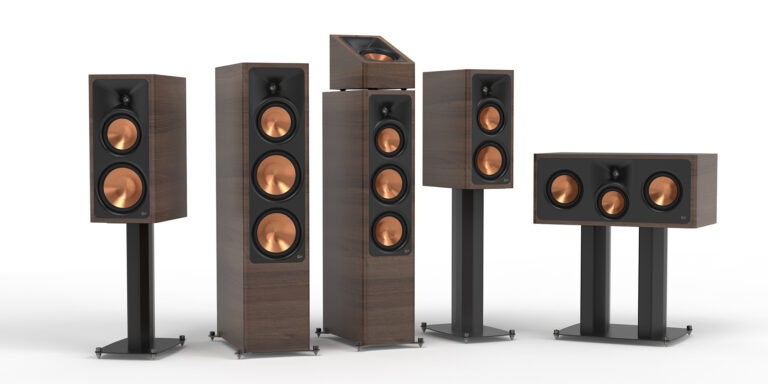
Klipsch has unveiled Reference Premiere III, a nine-model passive loudspeaker range built to cover everything from a compact two-channel system to a full Dolby Atmos theater. The speakers made their global debut at Audio Advice Live 2026 in Raleigh, North Carolina, and are scheduled to reach Klipsch.com and authorized retailers in October.
The headline change is not a rejection of the familiar Reference Premiere formula. Copper Cerametallic woofers, horn-loaded high frequencies, high efficiency and black-and-copper styling remain central to the pitch. Instead, Klipsch has concentrated on the horn-to-cabinet interface, off-axis response, cabinet construction and a simpler lineup.
What is new in Reference Premiere III?
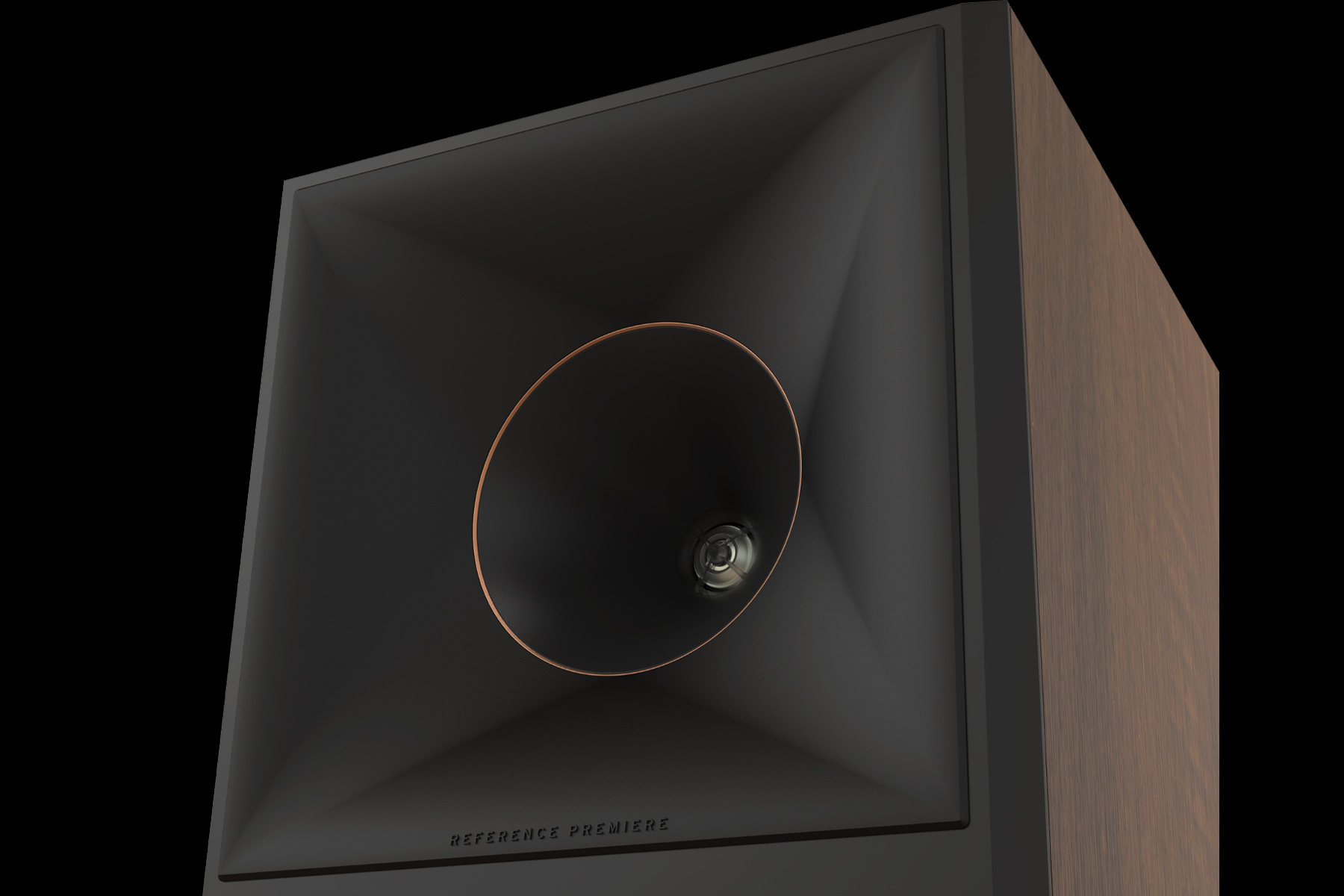
Every RP III model uses what Klipsch calls a new “high-density axial” Tractrix horn tweeter. The horn incorporates upgraded BMC material to reduce resonance and is mounted flush with the cabinet. Klipsch says the treatment reduces wave breakup and measurably improves off-axis response, producing a wider sweet spot.
That may be the most consequential change in daily use. Klipsch has always emphasized controlled directivity; the new claim is that RP III maintains that control while behaving better away from the center seat. If independent measurements support it, the benefit should be easier placement, more consistent sound across a sofa and a smoother contribution from room reflections. That is more meaningful than another round of bigger-number marketing.
The copper Cerametallic woofer remains the visual and acoustic signature. Klipsch has not yet published the full specifications needed to compare sensitivity, frequency response, crossover points and distortion directly with Reference Premiere II, so it is too early to quantify the acoustic gains.
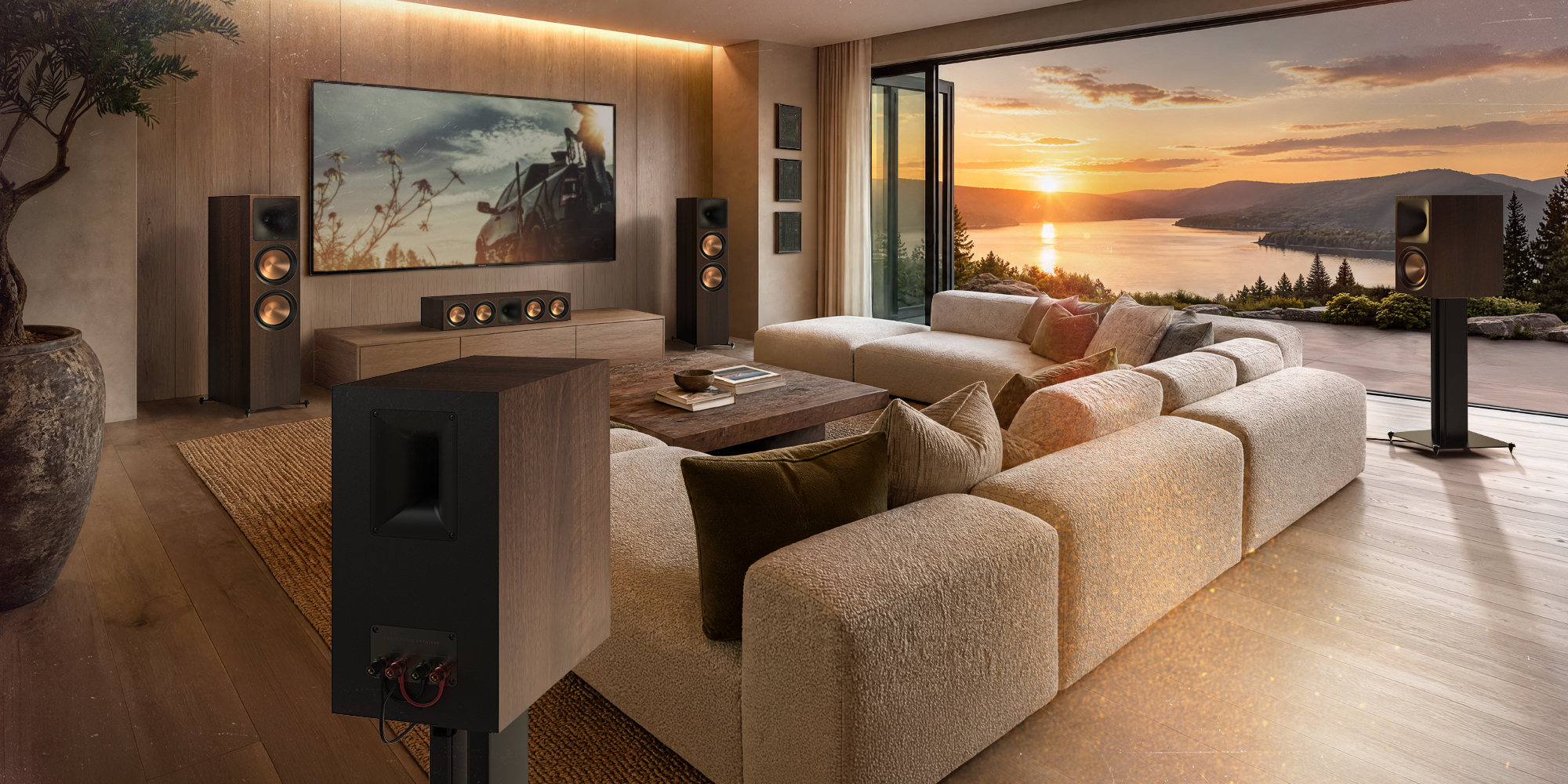
Cabinets get a new knife-edge profile intended to increase rigidity while giving the speakers a cleaner, more contemporary shape. Floorstanding models use adjustable metal outrigger feet for stability, positioning and reduced cabinet-to-floor vibration. Ebony and Walnut finishes return, accompanied by floating fabric grilles, copper accents and redesigned rear input panels.
Immersive-audio flexibility remains a priority. The RP-8263FA integrates upward-firing Dolby Atmos height drivers, while the RP-5103SA can sit atop a tower or monitor, or mount on a wall as a height or surround speaker. Compatible Onkyo receivers also support Klipsch Optimized Mode, which applies model-specific crossover settings during setup.
The nine models and U.S. prices
| Type | Model | U.S. MSRP |
|---|---|---|
| Dolby Atmos floorstander | RP-8263FA | $1,299.99 each |
| Floorstander | RP-8020F | $799.99 each |
| Floorstander | RP-6203F | $699.99 each |
| Bookshelf/monitor | RP-6103M | $699.99 per pair |
| Bookshelf/monitor | RP-5103M | $549.99 per pair |
| Center channel | RP-5203C | $749.99 each |
| Center channel | RP-5403C | $449 each |
| Surround | RP-5203S | $849.99 per pair |
| Dolby Atmos surround/height module | RP-5103SA | $649.99 per pair |
All nine models are due in October. Klipsch says they can be paired with either its new compact sealed Reference Premiere subwoofers or the existing full-size ported models.
Reference Premiere did not start at “I”
The Series III label is tidy, but the history is a little less tidy. By Klipsch’s own chronology, this is the fourth major chapter of Reference Premiere.
Klipsch launched the original Reference Premiere family at CES 2015 with 10 passive models. The RP-280F, RP-160M and their siblings established the template: a 90-by-90-degree Hybrid Tractrix horn, titanium Linear Travel Suspension tweeter, copper Cerametallic woofer and a silicone-based horn surface intended to suppress resonance. Dolby Atmos towers and elevation modules followed later that year.
The RP-8000F/RP-600M generation arrived in 2018 without a Roman numeral. It refined the horn with a compressed molded silicone face and computer-modeled phase plug, added a vented tweeter architecture, and continued the push toward better ports, feet and furniture-friendly finishes.
Then came Reference Premiere II in 2022. Klipsch explicitly called that lineup the third generation, even though “II” appeared in the model names. It was an 11-model range with a larger edge-to-edge 90-by-90-degree silicone-composite horn, redesigned Cerametallic woofers with aluminum shorting rings, additional cabinet bracing and divided internal volumes, plus cleaner Dolby Atmos wiring.
That makes the 2026 Series III range the fourth substantial Reference Premiere iteration, even if the suffix only says “III.” The important continuity is more obvious than the naming: Klipsch keeps working on the same basic equation of controlled directivity, high sensitivity, low distortion and home-theater scalability.
A more focused range—and a value question
Reference Premiere III contracts the line from 11 speakers to nine. There are now three towers instead of four and two centers instead of three. That should make the range easier to understand, but it also removes some of the fine-grained stepping stones that helped shoppers match a speaker closely to room size and budget.
The entry point is $549.99 per pair for the RP-5103M monitors. A pair of RP-6203F towers costs $1,399.98, while the integrated-Atmos RP-8263FA reaches $2,599.98 per pair. Those are not bargain-bin numbers, but Reference Premiere remains Klipsch’s attainable performance tier below its costlier Heritage offerings and emerging higher-end concepts.
For budget-minded buyers, the new release creates an unusually sensible fork in the road. RP III’s promised off-axis improvement could matter in a wide seating area or a reflective living room. On the other hand, outgoing RP II inventory is already being discounted heavily, and that line remains a mature, known quantity with published specifications and years of owner experience. A Roman numeral alone is not a reason to replace a good speaker.
Our read: RP III looks like an intelligent refinement rather than a clean-sheet revolution. The wider-sweet-spot claim is the part to watch; the rest—better feet, stiffer cabinets, updated inputs and a cleaner industrial design—supports it without changing what makes Reference Premiere recognizable. We will reserve judgment on the audible size of the upgrade until complete specifications and independent measurements arrive.
This is a news analysis based on manufacturer information; Audiophiles on a Budget has not auditioned or measured the Reference Premiere III speakers.