Bowers & Wilkins 800 Series Diamond D5: The 60-Year Flagship Line Gets Its Next Act
No, the new Bowers & Wilkins 800 Series Diamond D5 is not budget audio. The least expensive stereo pair in the lineup is $15,000, and the flagship 801 D5 is $65,000 per pair.
The 800 Series is where Bowers & Wilkins puts its sharpest loudspeaker thinking first. The trickle-down effect is real, even if it takes time. What shows up here as an exotic reference product can eventually influence more attainable speakers, custom-install models, and the used market. So if you care about where hi-fi loudspeaker design is headed, take note.
Announced around High End Vienna 2026 and now live on the Bowers & Wilkins U.S. site, the 800 Series Diamond D5 replaces the D4 generation with a seven-model family: four floorstanding speakers, one standmount speaker, and two center-channel speakers for serious home theater systems.
I have not heard the D5 models, and I am not going to pretend otherwise. The useful thing here is to look at what Bowers & Wilkins changed and why this lineup carries more history than the average luxury speaker launch.
The Lineup: Seven Models, No Casual Price Tags
The 800 Series Diamond D5 range starts with the 805 D5 standmount and stretches to the 801 D5 flagship tower. Bowers & Wilkins also has two dedicated center channels, which is the part of the lineup that matters if you are building a home theater around the same voicing as the main left and right speakers.
| Model | U.S. price | What it is |
|---|---|---|
| 801 D5 | $65,000 / pair | Flagship 3-way floorstander with 10-inch Aerofoil bass drivers |
| 802 D5 | $45,000 / pair | Large 3-way floorstander with 8-inch Aerofoil bass drivers |
| 803 D5 | $35,000 / pair | Most compact D5 floorstander with the Turbine Head enclosure |
| 804 D5 | $25,000 / pair | More conventional slim floorstander with an aluminum midrange enclosure |
| 805 D5 | $15,000 / pair | Standmount model with Diamond tweeter and 6.5-inch Continuum bass/midrange driver |
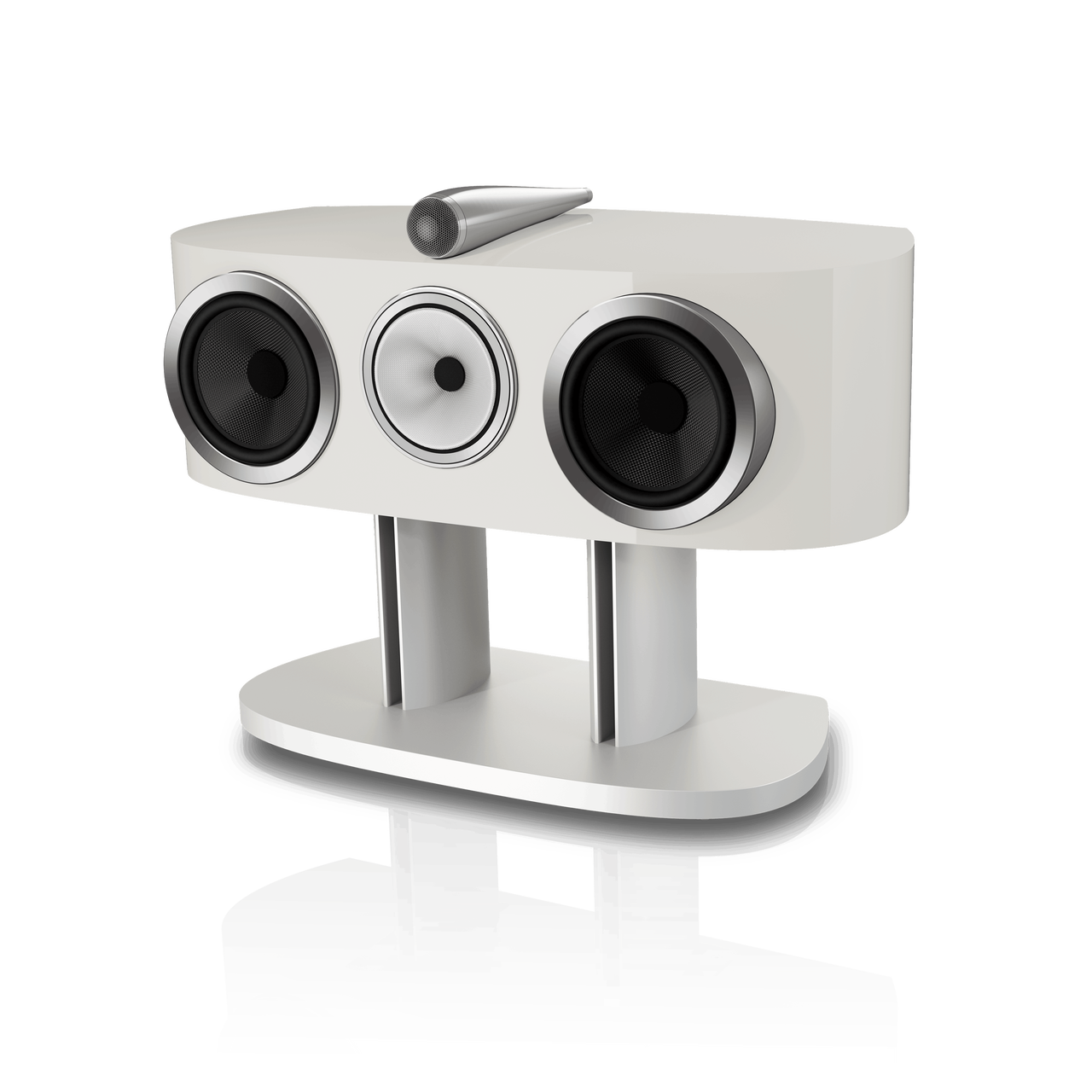
| HTM81 D5 | $15,000 each | Large center channel intended to pair with 801 D5 or 802 D5 |
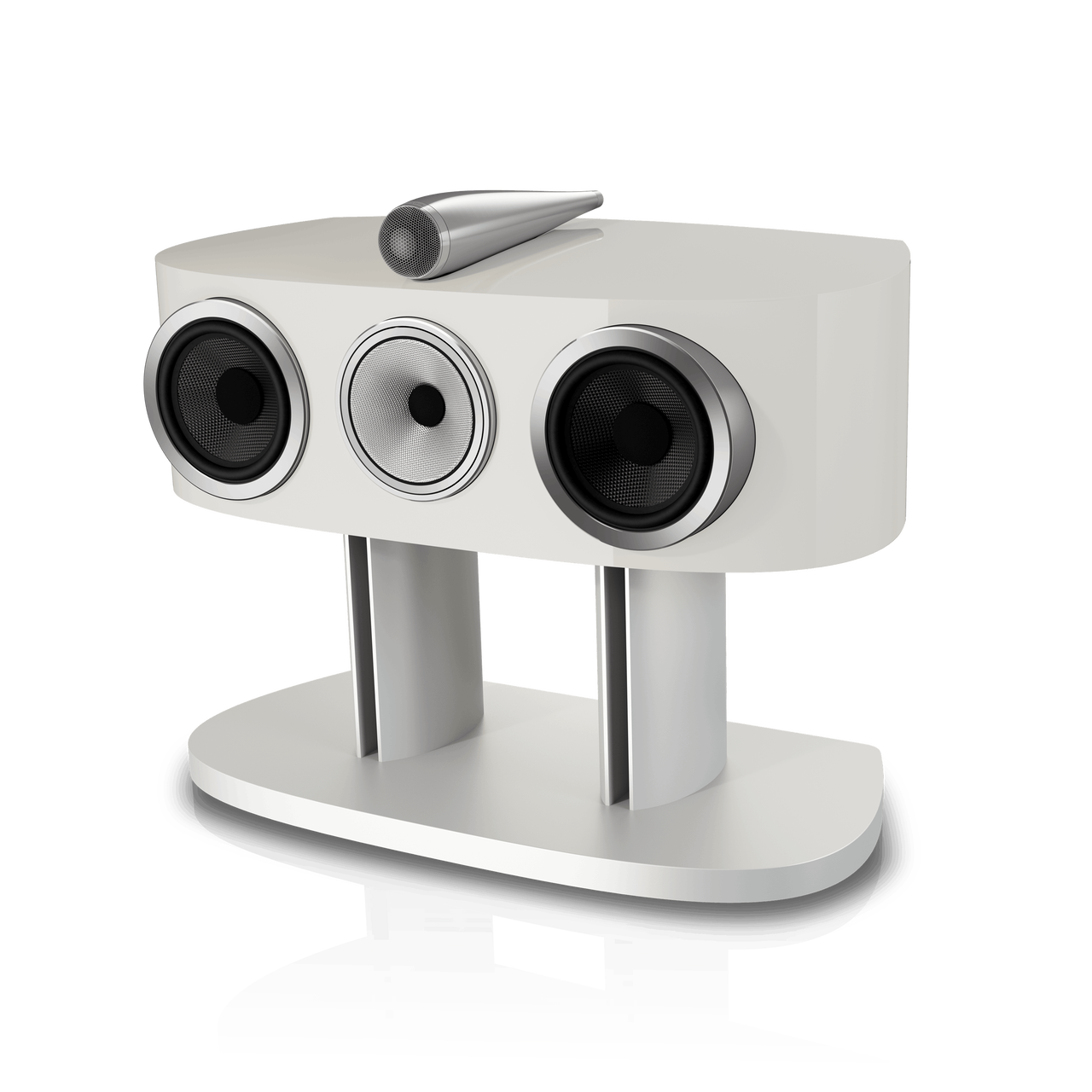
| HTM82 D5 | $12,000 each | Smaller center channel intended to pair with 803 D5 or 804 D5 |
There are also matching stands: FS-805 D5 for the 805 D5 at $2,000 per pair, and FS-HTM D5 for the center channels at $1,500 each. Finishes for the main stereo speakers are Stealth Black, Warm White, Light Walnut, and Dark Walnut. The center channels are listed in Stealth Black, Warm White, and Dark Walnut.
801 D5: The Statement Piece
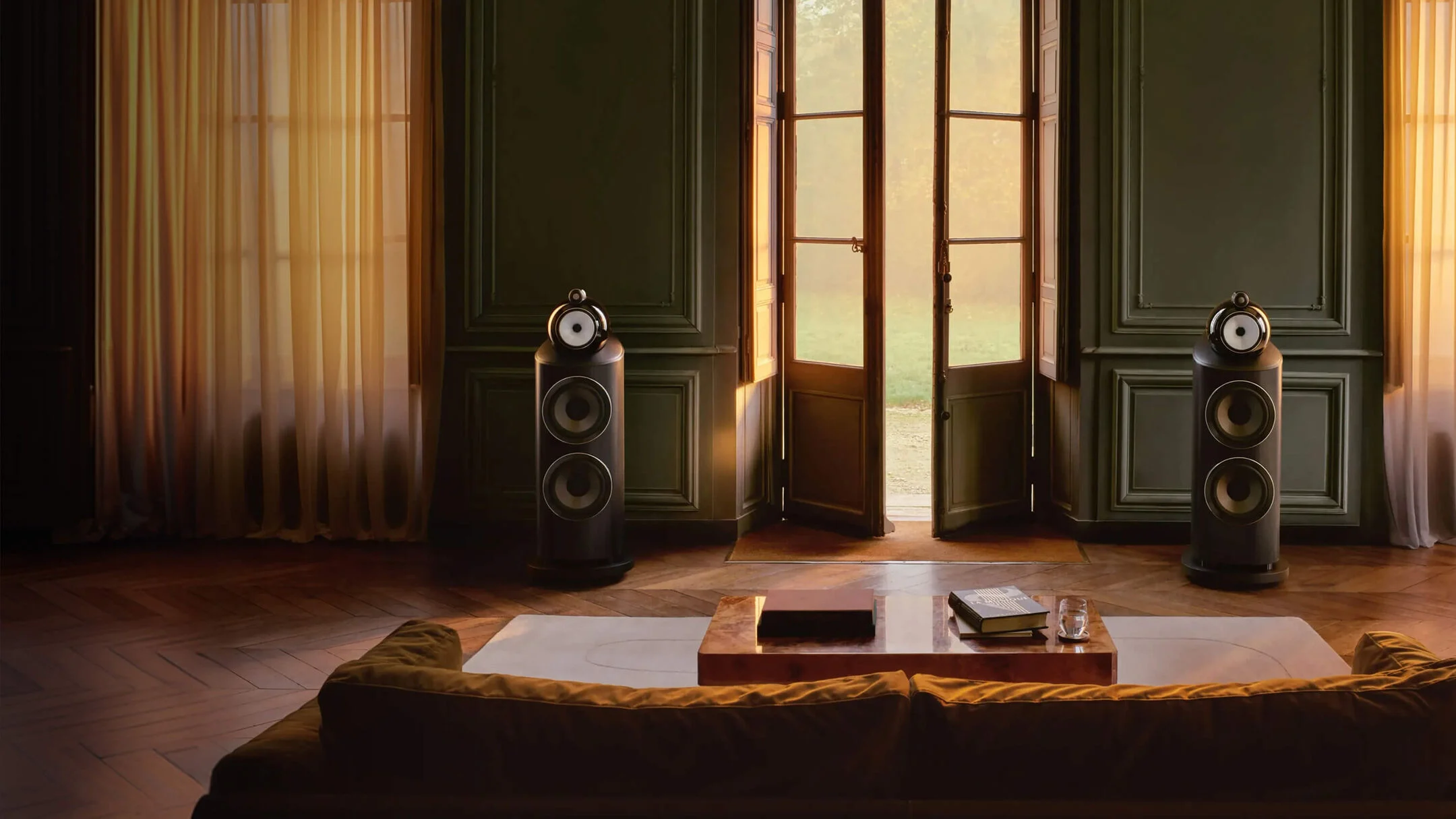
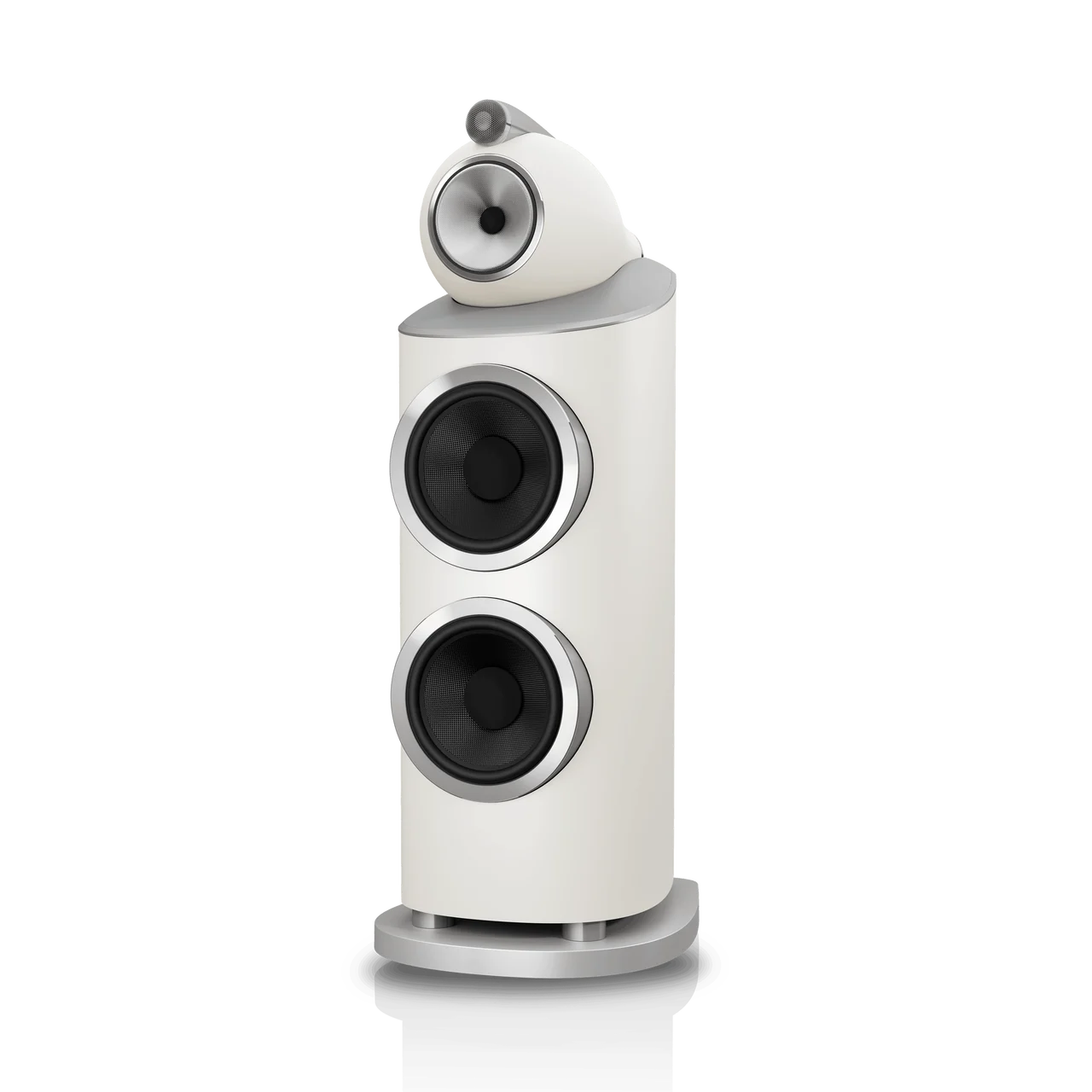
The 801 D5 is the model Bowers & Wilkins wants judged as the reference. It uses a 1-inch Diamond dome tweeter in the company’s Solid Body Tweeter-on-Top housing, a 6-inch Continuum FST midrange driver in a Turbine Head enclosure, and two 10-inch Aerofoil bass drivers. The official information sheet lists a frequency response of 15Hz to 28kHz, plus or minus 3dB, and a weight of 234.6 pounds per speaker.
At this level, the cabinet is part of the driver system. Bowers & Wilkins is chasing lower resonance, less stored energy, and cleaner separation between bass, midrange, and treble. Whether the end result earns the price is a listening-room question, but the design goal is clear: remove the speaker from the music as much as possible.
802 D5: The Almost-Flagship
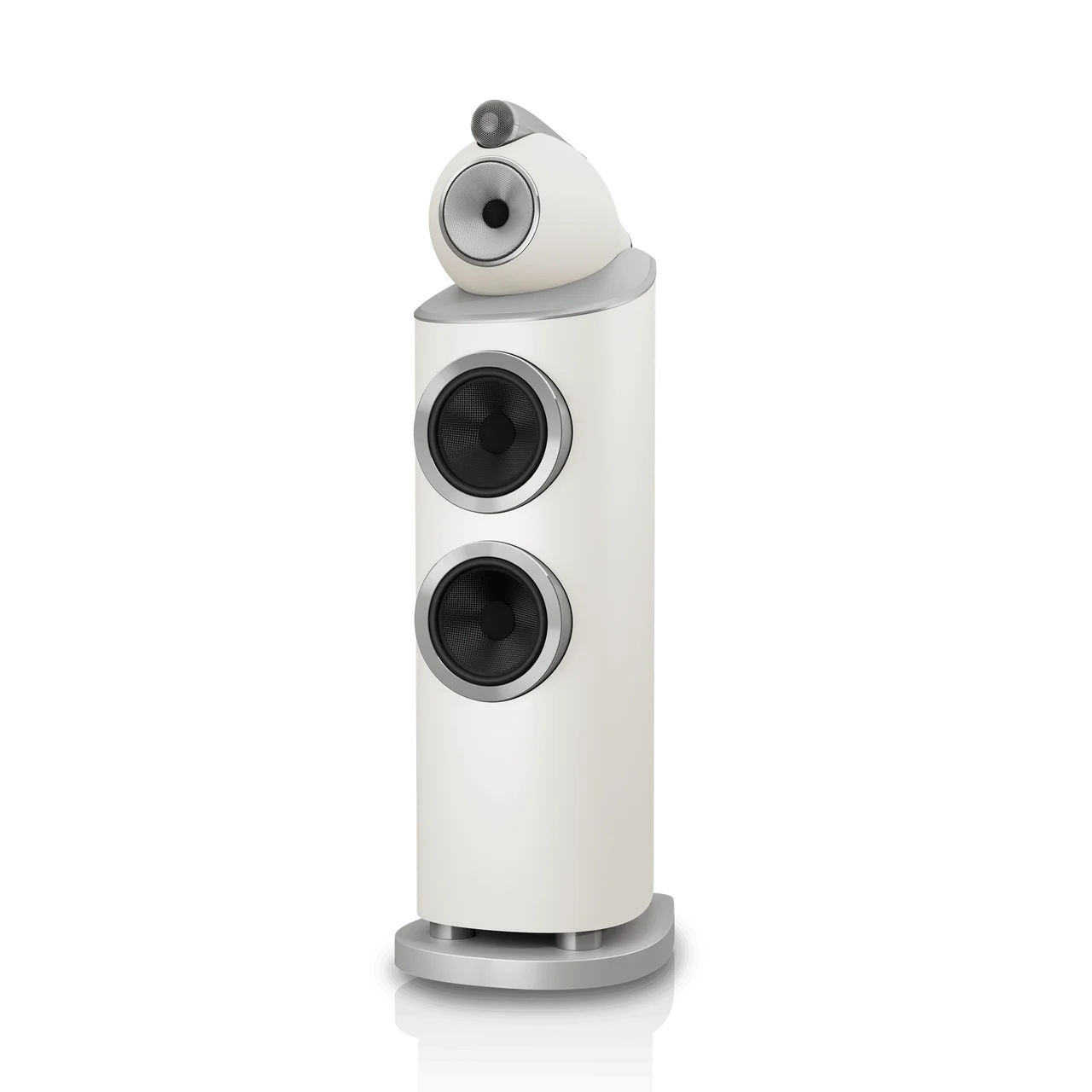
The 802 D5 is the classic move in a flagship range: keep much of the architecture, shrink the scale, and make the price slightly less vertigo-inducing. It keeps the Diamond tweeter, Solid Body Tweeter-on-Top assembly, 6-inch Continuum FST midrange, and Turbine Head layout, but uses two 8-inch Aerofoil bass drivers instead of the 801 D5’s 10-inch units.
At $45,000 per pair, “more affordable” needs quotation marks the size of a shipping crate. Still, this is the model that will probably make sense to buyers who want the big 800 Series experience but do not have the room, budget, or structural confidence for the 801 D5.
803 D5: The Smallest Turbine Head Tower
The 803 D5 is where the range starts to look more living-room realistic, at least physically. It is still a serious 3-way tower, but Bowers & Wilkins positions it as the most compact model in the D5 lineup to use the Turbine Head. The driver layout is a Diamond tweeter, 5-inch Continuum FST midrange, and twin 7-inch Aerofoil bass drivers.
That Turbine Head matters because it mechanically separates the midrange driver from the main bass cabinet. In plain English, the midrange gets its own less-chaotic neighborhood. Voices, strings, and imaging cues live in that range, so this is not just industrial design theater.
804 D5: The Sleeper Of The Line?
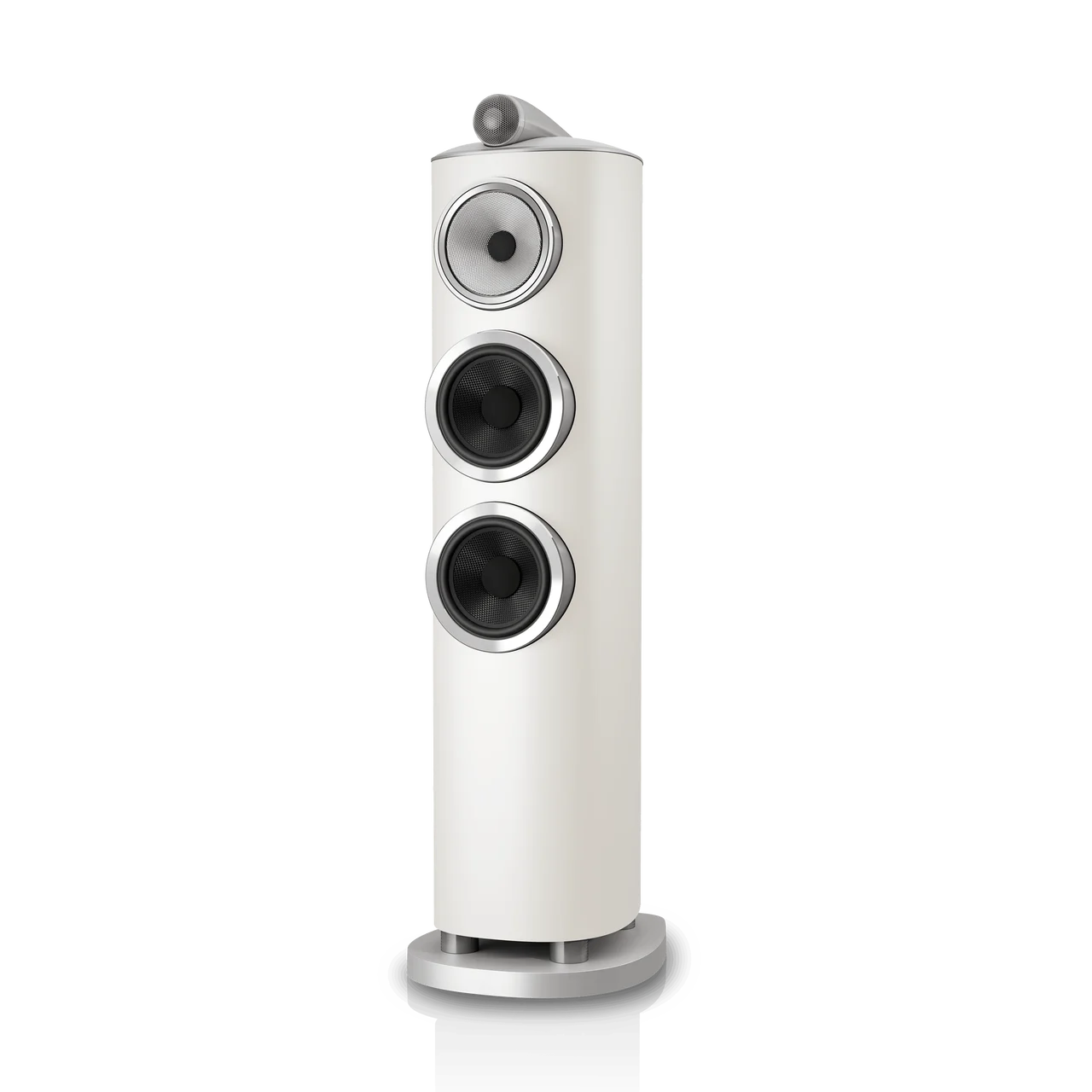
The 804 D5 might be the most interesting model for real-world high-end systems. It drops the external Turbine Head and uses a more conventional floorstanding form, but Bowers & Wilkins added an internal aluminum enclosure for the 5-inch Continuum FST midrange. Below that sit two 6.5-inch Aerofoil bass drivers.
That makes the 804 D5 the model to watch if you like the 800 Series idea but not the full visual drama of the turbine-headed towers. It is still $25,000 per pair, so nobody should confuse it with a bargain. But in this family, it is the most compact floorstander and the one most likely to fit into a high-end living room without visually taking command of the whole space.
805 D5: The Standmount With The Big Ask
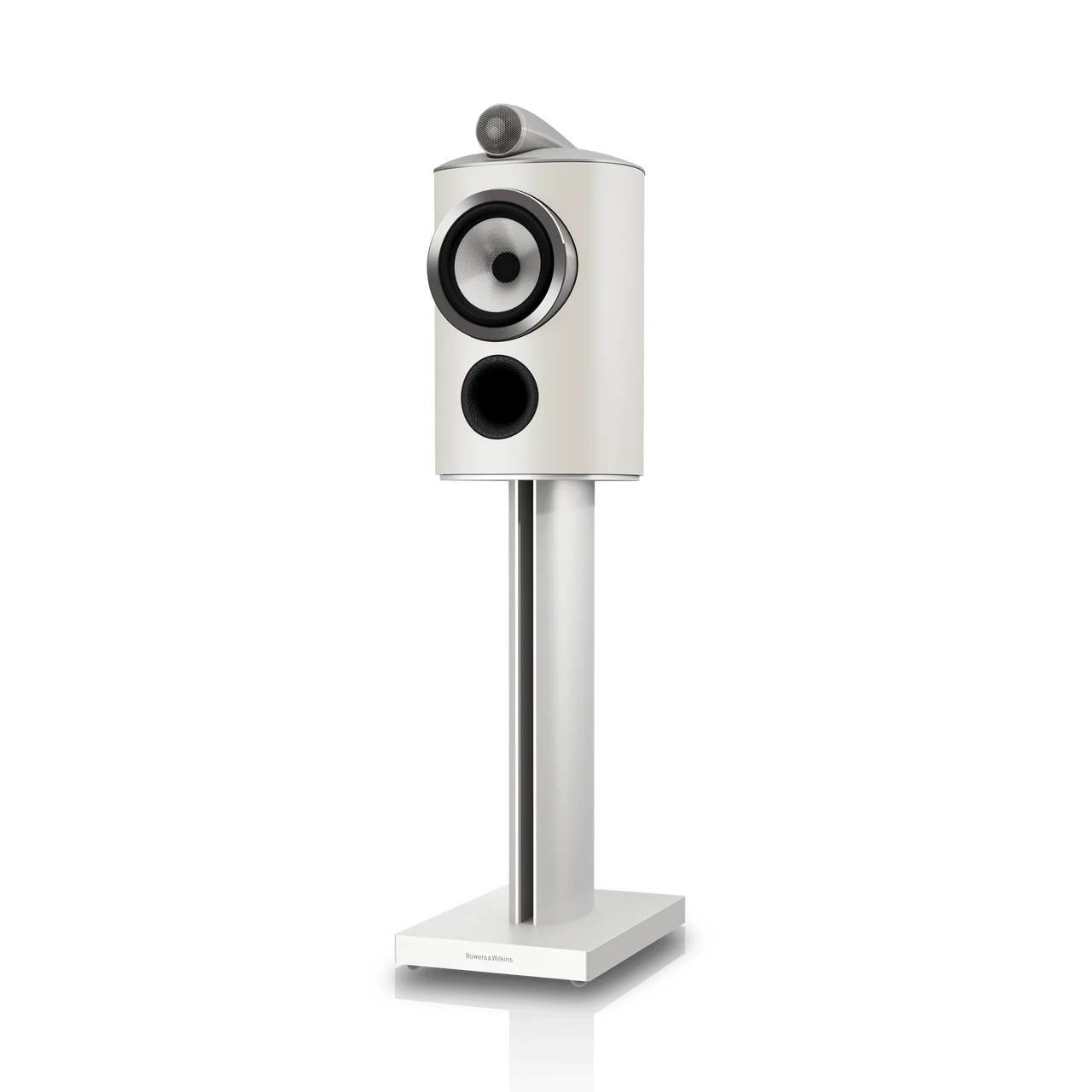
The 805 D5 is the smallest stereo model in the range, but at $15,000 per pair before stands, it still makes a very serious demand. It combines the Diamond dome tweeter with a 6.5-inch Continuum bass/midrange driver in a reverse-wrap cabinet, and Bowers & Wilkins clearly expects buyers to use the dedicated FS-805 D5 stands.
This is the model for smaller listening rooms, near-reference two-channel systems, or luxury theater builds where subwoofers handle the heavy lifting below. It is also the one most likely to trigger the old audiophile question: at what point does a standmount become more about precision than value? The 805 D5 will have to answer that in listening rooms, not on a spec sheet.
The Center Channels: HTM81 D5 And HTM82 D5
The HTM81 D5 and HTM82 D5 are not afterthoughts. Both are 3-way center-channel speakers with Diamond tweeters, Solid Body Tweeter-on-Top housings, Continuum FST midrange drivers, Aerofoil bass drivers, and Matrix bracing. The larger HTM81 D5 uses a 6-inch midrange and twin 8-inch bass drivers, while the HTM82 D5 uses a 5-inch midrange and twin 6.5-inch bass drivers.
Bowers & Wilkins positions the HTM81 D5 for systems based on the 801 D5 or 802 D5. The smaller HTM82 D5 is meant to match the 803 D5 or 804 D5. That makes sense. If you are spending this kind of money on front left and right speakers, a compromised center channel would be a strange place to suddenly discover restraint.
What Changed From D4 To D5?
The D5 story is not a clean-sheet reinvention, and that is probably the right call. The 800 Series has an established design language: Diamond tweeter, Continuum midrange, Aerofoil bass drivers, Matrix bracing, reverse-wrap cabinets, and, on the larger models, the Turbine Head. D5 is about refinement.
Bowers & Wilkins says the new line receives acoustic, mechanical, and electrical improvements. The important changes include enhanced Matrix bracing, more aluminum reinforcement in the cabinet structure, updated top-plate and plinth work on the floorstanders, improved crossover components, upgraded internal wiring, and a more acoustically transparent tweeter grille mesh derived from the company’s Signature models.
In other words: less cabinet talk, less vibration, more attention to the places where mechanical behavior turns into sound. That is not as easy to market as a new driver material, but it is exactly the sort of engineering that can separate a good speaker from one that disappears into the room.
The 800 Series Backstory
The 800 Series is not just Bowers & Wilkins’ expensive line. It is central to the company’s identity. The original 801 was developed after John Bowers pushed his team to build a loudspeaker that could satisfy full professional monitor requirements. Abbey Road Studios adopted the 801 full-time in 1980, starting a relationship that Bowers & Wilkins still leans on for good reason.
That history gives the D5 launch real context. The D3 generation reset the modern 800 Series era with the Continuum cone replacing Kevlar in the midrange. The D4 generation brought further cabinet, suspension, and mechanical refinements, including Bowers & Wilkins’ Biomimetic Suspension. D5 now pulls lessons from the Signature models into the main 800 Series Diamond family.
That is evolution, not theater. And in high-end loudspeakers, evolution is often the game.
Why Budget-Minded Audiophiles Should Care
Most readers are not shopping for a $65,000 pair of speakers. Fair enough. Most people are also not shopping for a Formula 1 car, but racing technology still changes the way manufacturers think. The 800 Series Diamond D5 is a look at Bowers & Wilkins’ current answer to a very old question: how do you make a box of drivers behave less like a box of drivers?
There is also a practical angle. New flagship launches can affect the used and dealer-demo market. If D5 pushes some owners out of D4, D3, or older 800 Series speakers, patient buyers may eventually see interesting opportunities. That does not make an old 800 Series speaker cheap, but “used high-end” is often where the real audiophile-on-a-budget action lives.
The caution is simple: these speakers demand serious amplification, careful placement, and a room that lets them breathe. Buying into an older 800 Series model because the price finally looks reachable can be smart. Buying one without budgeting for the room, amp, delivery, and service side is how a dream system becomes a very heavy problem.
Bottom Line
The Bowers & Wilkins 800 Series Diamond D5 lineup is a major high-end speaker launch, even if it sits far outside normal-budget territory. The range covers everything from the 805 D5 standmount to the 801 D5 flagship tower, with center-channel options that make the system side of the equation more complete than many two-channel-only reference lines.
The interesting part is not just the price. It is the direction: more cabinet control, more Signature-derived refinement, and a continued push to make the mechanical structure of the speaker quieter so the drivers can do their work. That is the kind of engineering that deserves attention, even if your actual speaker budget lives several decimal places away.
Sources checked: Bowers & Wilkins 800 Series Diamond D5 product pages and technical information sheets, Bowers & Wilkins’ 801 Abbey Road history, Darko.Audio launch coverage, and ecoustics launch coverage.
800 Series Diamond D5 Model Gallery
Official Bowers & Wilkins product shots for the complete 800 Series Diamond D5 lineup.

Images courtesy of Bowers & Wilkins.