Klipsch Rebellion Leads a Packed High End Vienna 2026 Showcase
Klipsch did not arrive at High End Vienna 2026 with one small anniversary nod and a cake in the corner. The lead story is the Klipsch Rebellion, a compact Heritage Series loudspeaker that finally gives the line a true bookshelf/standmount option, and does it by reaching back to one of Paul W. Klipsch’s rarest designs.
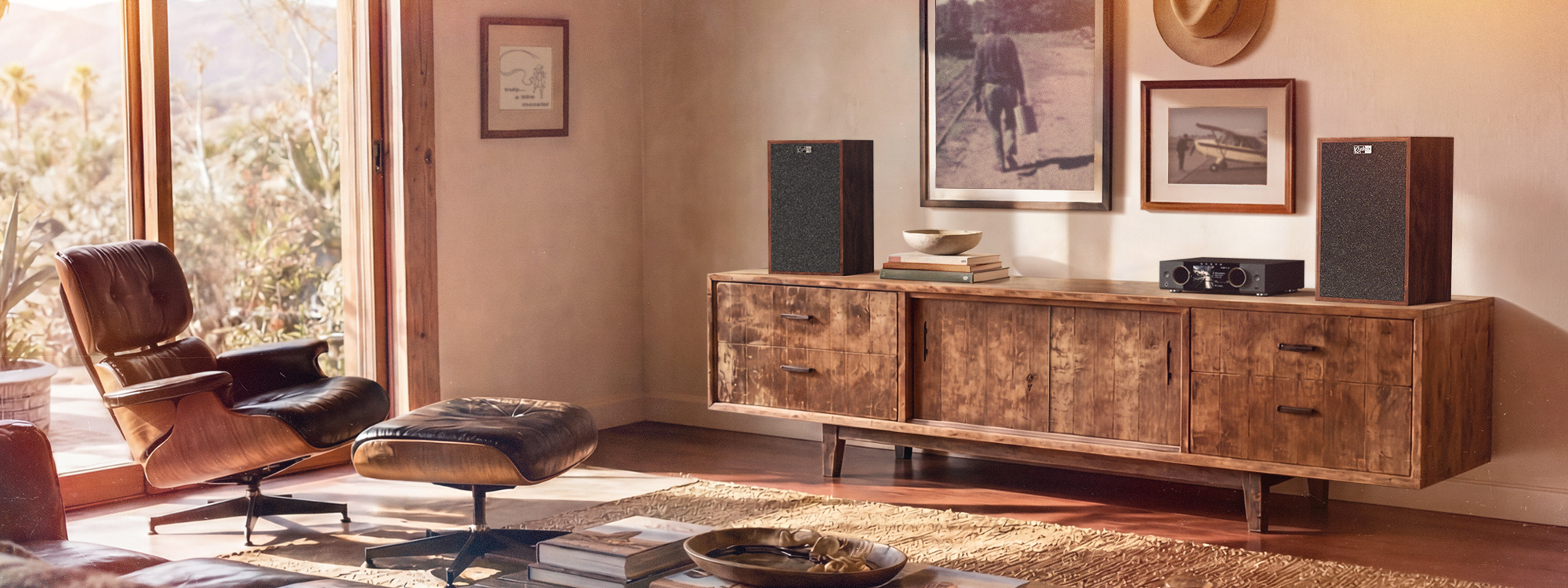
Klipsch says the Rebellion is based on PWK’s 1958 H8, a design so uncommon that only 16 were made. At Vienna, the company is showing the new speaker alongside an original H8 and other pieces on loan from the Klipsch Museum of Audio History at Booth 1.61/1.62. For Heritage fans, that matters. The line has long had “compact” options, most notably the Heresy, but a genuine premium bookshelf speaker wearing the Heritage badge is new ground.
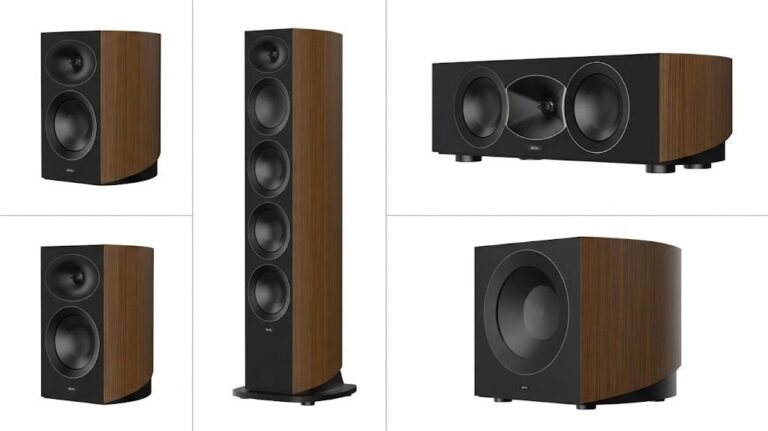
The modern Rebellion is a high-efficiency two-way design, hand-built in Hope, Arkansas. Klipsch lists a K-702 tweeter mounted to a K-703 Tractrix horn with patented Mumps technology, plus a new K-81-EP woofer. Bass is reinforced by a rear Tractrix flare port, which Klipsch says is designed to move air more efficiently and reduce port noise. The cabinet uses grain-matched real wood veneer panels from the same timber, with American Walnut and Black Ash as standard finishes and a limited Tigerwood finish for the company’s 80th anniversary.
Pricing is: $2,599 per pair in North America, with availability planned for July 2026. The Rebellion is designed for two-channel systems, Heritage-based home theater systems, and the Klipsch KS-24 stands.
Until sensitivity, frequency response, impedance, dimensions, weight, and real listening impressions are on the table, the Rebellion is a strong story and a lot to prove. Still, for a company built on horn-loaded efficiency and American cabinet work, a true Heritage standmount makes sense.
The Klipschorn Gets the 80th Anniversary Treatment
If the Rebellion is Klipsch looking for a more room-friendly Heritage form factor, the Limited Edition 80th Anniversary Klipschorn is the company leaning all the way into origin story. Making its global debut during High End Vienna 2026, the anniversary Klipschorn reimagines Paul W. Klipsch’s original 1946 patented loudspeaker as a limited-run, fully horn-loaded, two-way system.
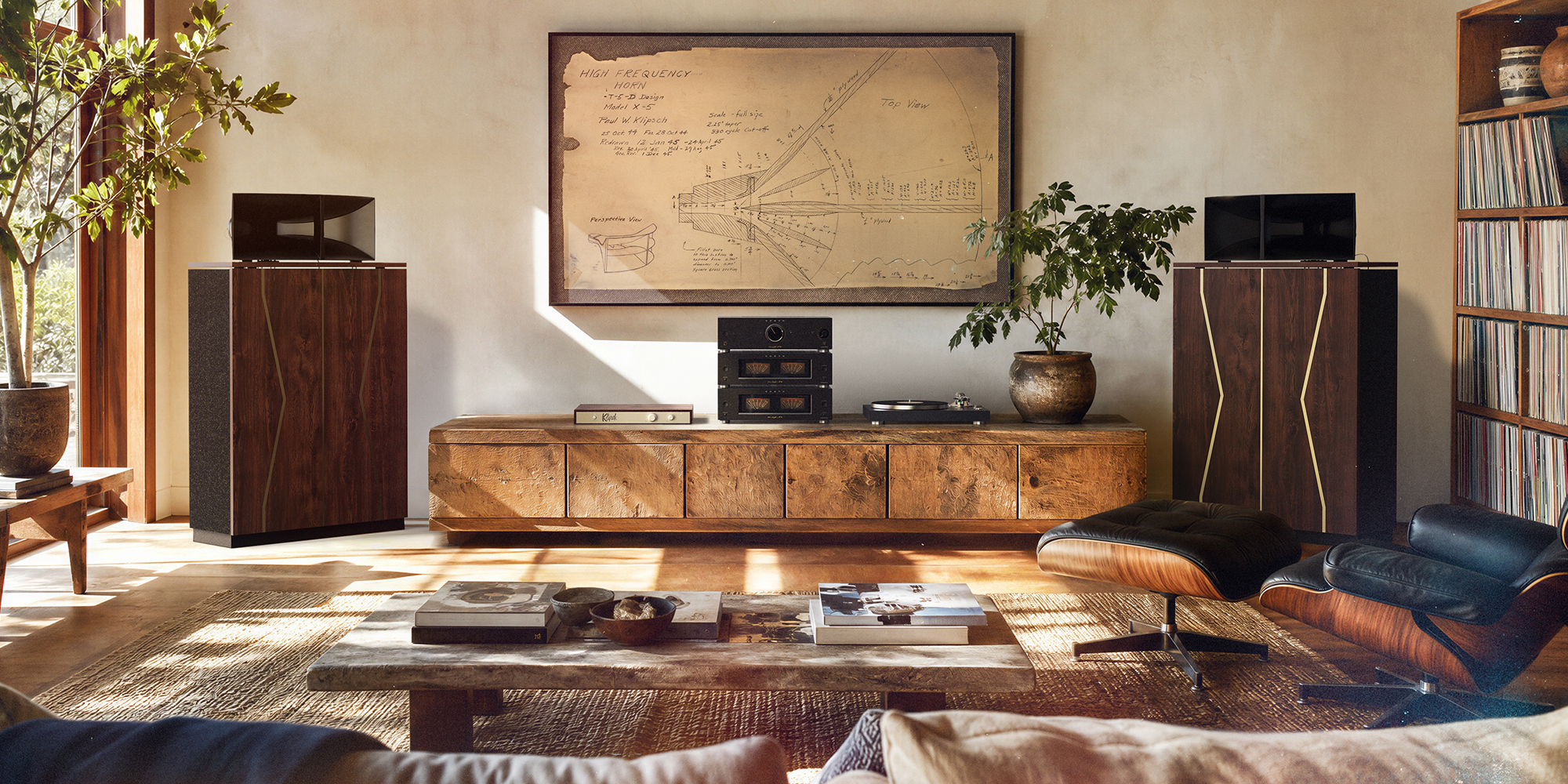
Production will be limited to 280 pairs worldwide. The technical hook is a modernized two-way architecture with an active crossover, a new K-5-K high-frequency horn with a 2-inch throat, and a high-powered 4-inch compression driver using the motor structure of the Klipsch Jubilee. The low end remains true to the Klipschorn premise: a fully enclosed folded-horn low-frequency cabinet built around a K-33-E 15-inch woofer.
The active crossover is not being positioned as a random modern add-on. Klipsch frames it as a continuation of PWK’s early interest in active networks, with DSP handling phase, delay, EQ, and gain to better integrate the crossover region. The external Klipsch Active Crossover gets a matching Tigerwood veneer and includes adjustable low- and high-frequency trim controls.
The anniversary model is also a collector piece. Each speaker is hand-built to order in Hope, Arkansas, finished in Tigerwood, accented with brass inlay tracing the folded horn, and fitted with a sandcast aluminum horn. Buyers also get a complimentary membership to the Klipsch Museum of Audio History and a special 180g vinyl pressing drawn from PWK’s 1950s KlipschTape stereo demo recordings, including some material Klipsch says has not previously been heard.
No bargain angle here. Klipsch has not listed public pricing in the press material, and orders will go through authorized Heritage retailers. But as an 80th anniversary statement, the Klipschorn X-5 is exactly on brand: expensive, historical, deeply horn-loaded, and allergic to being mistaken for lifestyle audio.
Atlas Headphones Return Klipsch to Premium Personal Audio
Klipsch is also using Vienna to put its Atlas Series headphones in front of European listeners. The Atlas line marks the brand’s return to premium hi-fi headphones, positioned as the next step beyond the earlier Heritage Headphone series.
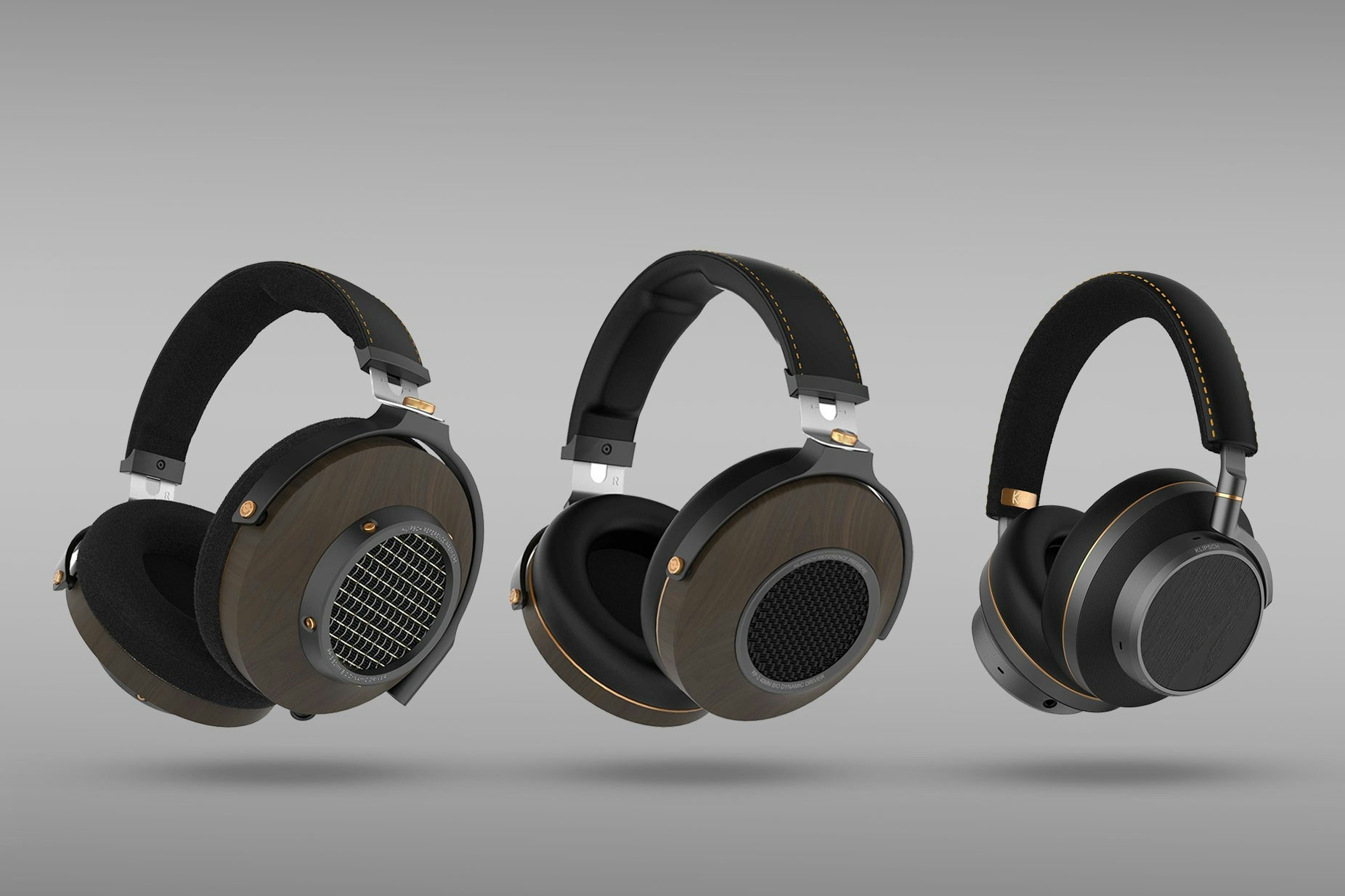
The Vienna-specific release focuses on the Atlas HP-2 and Atlas HP-3. The HP-2 is the closed-back hi-fi model, tuned for bass-forward listeners who want low-end impact without abandoning refinement. The HP-3 sits above it as the semi-open-back audiophile model, aimed at critical two-channel listening with a more spacious, speaker-like presentation.
The HP-3 comfort story is worth noting because premium headphones live or die over long sessions. Klipsch cites a wider cushioned headband, Alcantara materials, perforated earcups for breathability, and a package concept that includes a dedicated headphone stand. Product details and images are still marked as subject to change, which is another way of saying these are not final review units yet.
Klipsch expects HP-2 and HP-3 availability in Europe in fall 2026. Pricing has not been announced in the Vienna release. A broader CES preview earlier this year also named the Atlas HP-1, a wireless over-ear ANC model aimed at travel and everyday listening, with USB-C/lossless ambitions, a coaxial-driver concept, and planned third-party compatibility for spatial audio and hearing compensation. That model gives the Atlas family a mainstream option, but Vienna is where Klipsch is pointing the hi-fi crowd toward the wired HP-2 and HP-3.
The Fives II, Sevens II, and Nines II Bring Onkyo Inside the Box
Klipsch’s High End Vienna story also sits inside the broader 2026 rollout that began at CES with the next generation of powered speakers: The Fives II, The Sevens II, and The Nines II. These are not passive Heritage pieces. They are Klipsch’s answer to the buyer who wants a high-output two-speaker system that can handle TV, streaming, vinyl, gaming, and daily music without a stack of extra boxes.
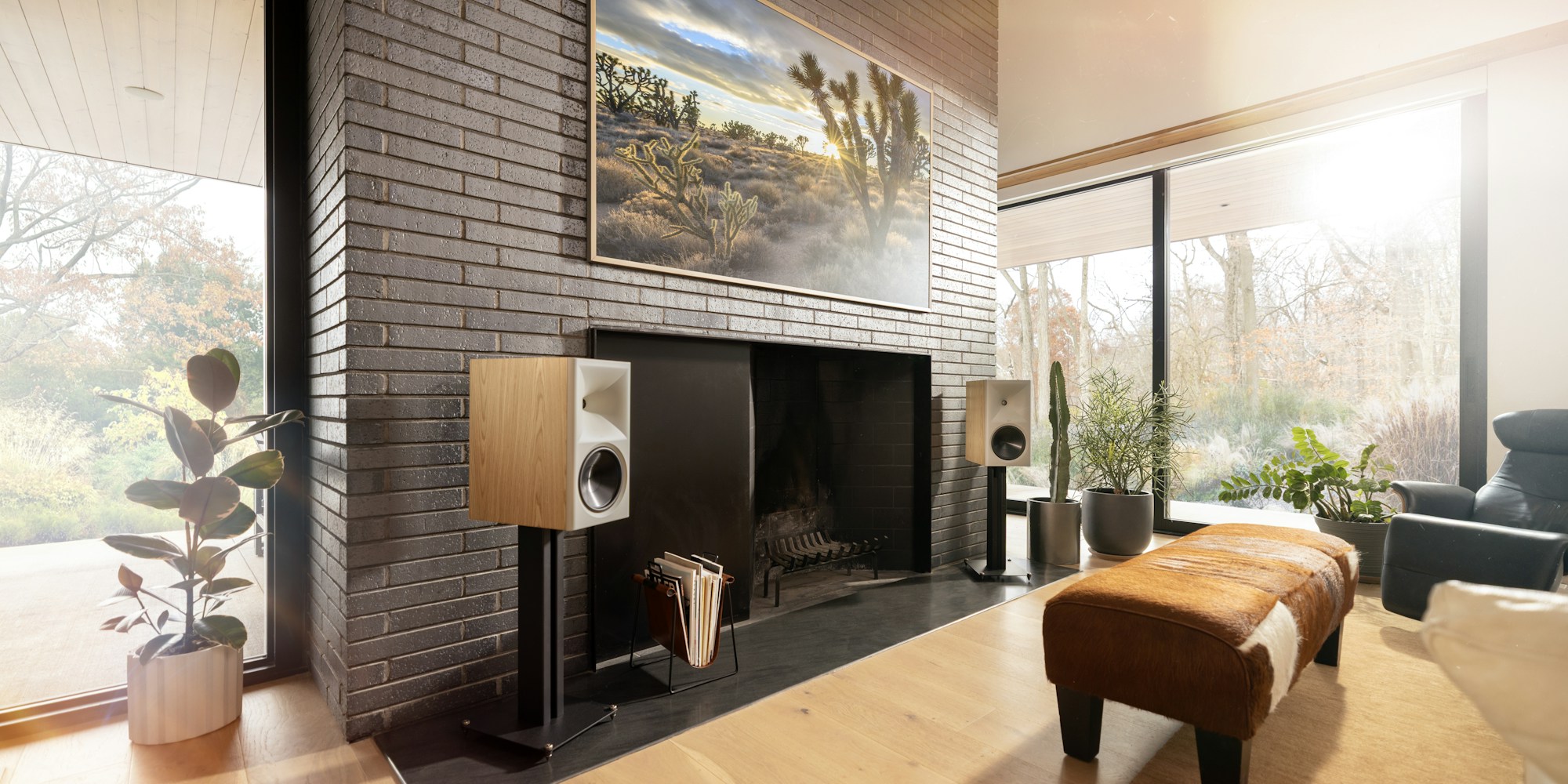
The big shift is the Onkyo-engineered electronics package. Klipsch describes it as AV-receiver architecture integrated directly into the powered speaker platform. All three models include Dolby Atmos support and HDMI eARC, while The Nines II adds DTS:X. The Sevens II and Nines II also include Dirac Live Room Correction in limited-bandwidth form with an included microphone, handled through the Klipsch Connect Plus app.
The hardware list is modern in the right ways: HDMI 2.1 input, HDMI eARC, optical, coaxial, analog input, USB-C playback, subwoofer output, built-in streaming, high-res playback up to 24-bit/96kHz, and a phono stage for turntables. Streaming support includes Google Cast, Apple AirPlay 2, Spotify Connect, Tidal Connect, Qobuz Connect, Roon Ready, and more. The Nines II also adds balanced XLR inputs, which gives it a studio-monitor-adjacent use case that the smaller models do not claim.
Woofer sizes scale with the line: 5.25 inches for The Fives II, 6.5 inches for The Sevens II, and 8 inches for The Nines II. Each uses a 1-inch titanium tweeter mounted to a 90 by 90 degree Tractrix horn. The Fives II is wired left/right; The Sevens II and Nines II add an optional wireless left/right connection. Finishes include Walnut and Ebony, plus a newer Red Oak veneer with a white baffle.
Pricing is straightforward: The Fives II at $1,399.99 per pair, The Sevens II at $1,999.99 per pair, and The Nines II at $2,399.99 per pair. Klipsch lists spring 2026 availability through Klipsch.com and authorized retailers. For an Audiophiles on a Budget reader, this is not “cheap,” but it does collapse speakers, amplification, streaming, HDMI switching, room correction, and phono support into one package. That is the value argument.
Ojas kO-R2 Turns the Demo Into a Design Moment
The most visually distinctive Klipsch event in Vienna may be happening outside the main venue. Following its world debut during Milan Design Week, the Klipsch + Ojas kO-R2 is continuing its world-tour treatment with a dedicated demonstration experience during High End Vienna 2026.
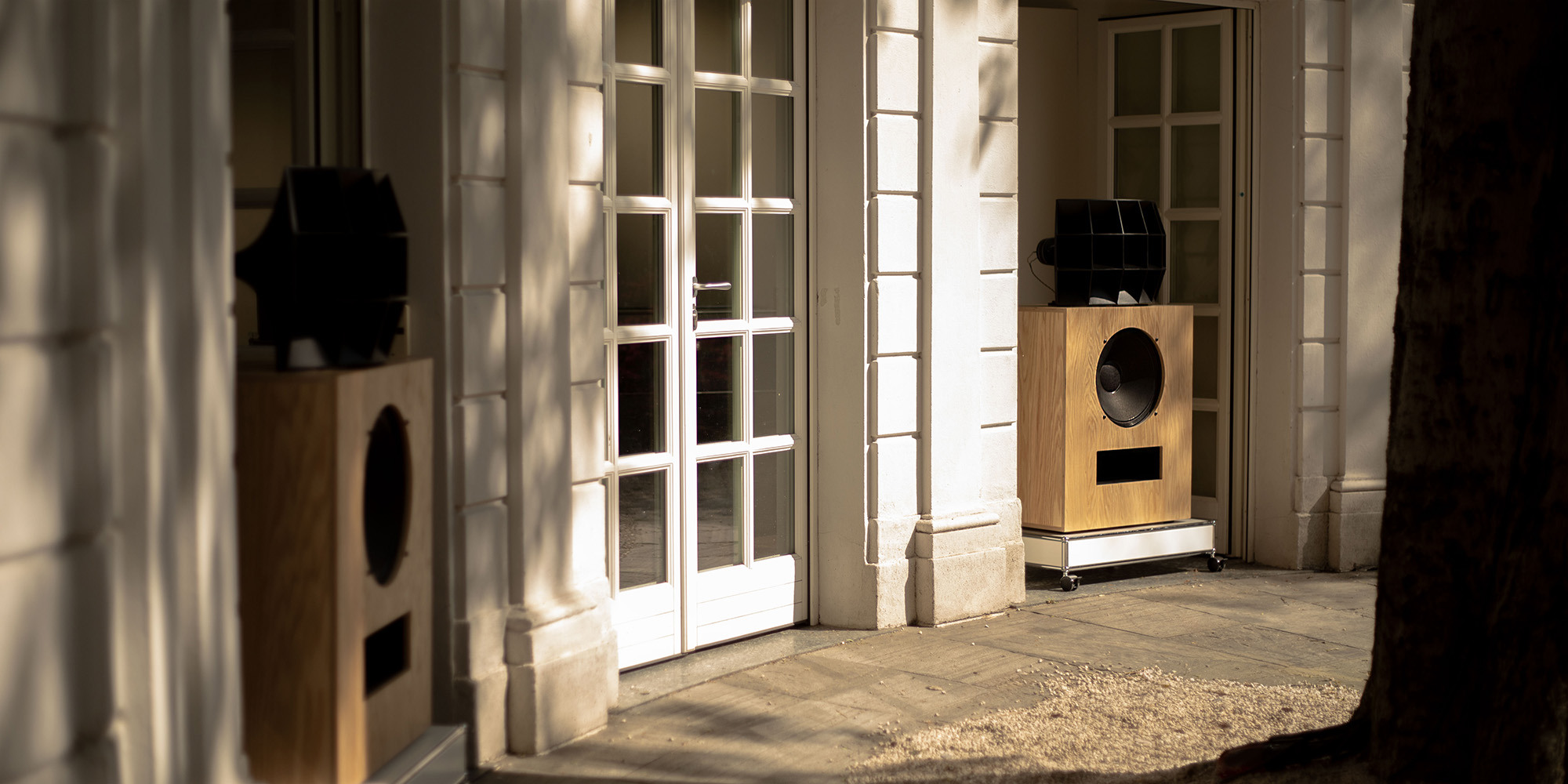
The kO-R2 is a limited edition two-way multisectoral horn loudspeaker created with Devon Turnbull, the multidisciplinary artist and acoustic designer behind Ojas. Only 600 pairs will be available worldwide. It is hand-built in Hope, Arkansas, with a Baltic birch cabinet, Red Oak veneer or Hammertone Silver finish, matte-black horn, anodized aluminum binding posts, anti-vibration rubber feet, laser-engraved metal ID plate, and a five-step high-frequency gain attenuator.
The centerpiece is the Ojas 1506 multisectoral horn, a heavy cast-aluminum exponential horn drawing inspiration from classic Western Electric and Altec designs. Klipsch lists a K-33-E 15-inch woofer, K-706 high-frequency driver, 39 Hz to 20 kHz +/- 3 dB frequency response, 97 dB sensitivity at 2.83V, 300W power handling, 118 dB calculated max continuous output, 760 Hz crossover point, 8-ohm nominal impedance, and a 120.5-pound net weight.
Pricing keeps it in collector/audiophile-object territory: $11,998 per pair in North America with August 2026 availability, and $13,998 per pair in APAC and EMEA, with APAC planned for July 2026 and EMEA for fall 2026. In the US, Klipsch says the kO-R2 will be sold direct through Ojas; in Europe, it will go through authorized retailers.
The Big Picture
There is a clear pattern to Klipsch’s Vienna presence: the company is using its 80th anniversary to stretch in several directions at once. Rebellion gives Heritage fans the bookshelf speaker they have been asking for. The 80th Anniversary Klipschorn goes deep into the archive and comes out with a limited-run flagship. Atlas tries to make Klipsch relevant again in premium headphones.
The powered-speaker line translates horn-loaded sound into a low-friction HDMI/streaming/room-correction system. And the Ojas kO-R2 brings the art-world listening-room energy that has been pulling younger design-conscious audiences into serious audio.
That is a lot of action for one show. It is also a useful reminder that anniversary years can go two ways: lazy badge editions, or real product movement. Klipsch appears to be choosing the second path. The Rebellion is the one to watch first, because it could become the most broadly relevant Heritage launch of the bunch. Not the biggest. Not the most expensive. Just the one that finally brings the Heritage formula into a cabinet size more rooms can actually handle.
Bottom line: High End Vienna 2026 is shaping up as a serious Klipsch showcase, with one foot in Hope, Arkansas history and the other in the modern two-speaker, headphone, and design-culture lanes. The next step is listening, not brochure translation.