Emotiva LXR-11 and LXP-16 Include the Full Dirac Live Suite
The most important number in Emotiva’s new LX Series may be zero: the extra amount buyers must pay to unlock Dirac’s complete room-optimization stack.
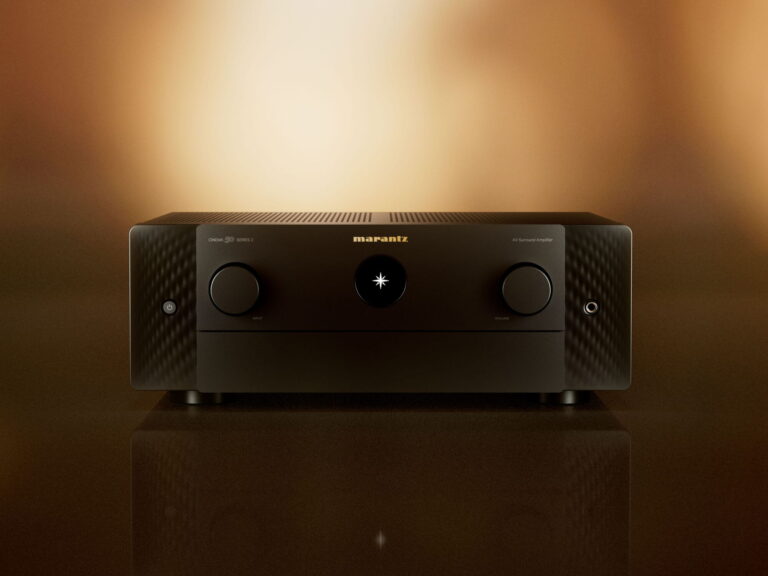
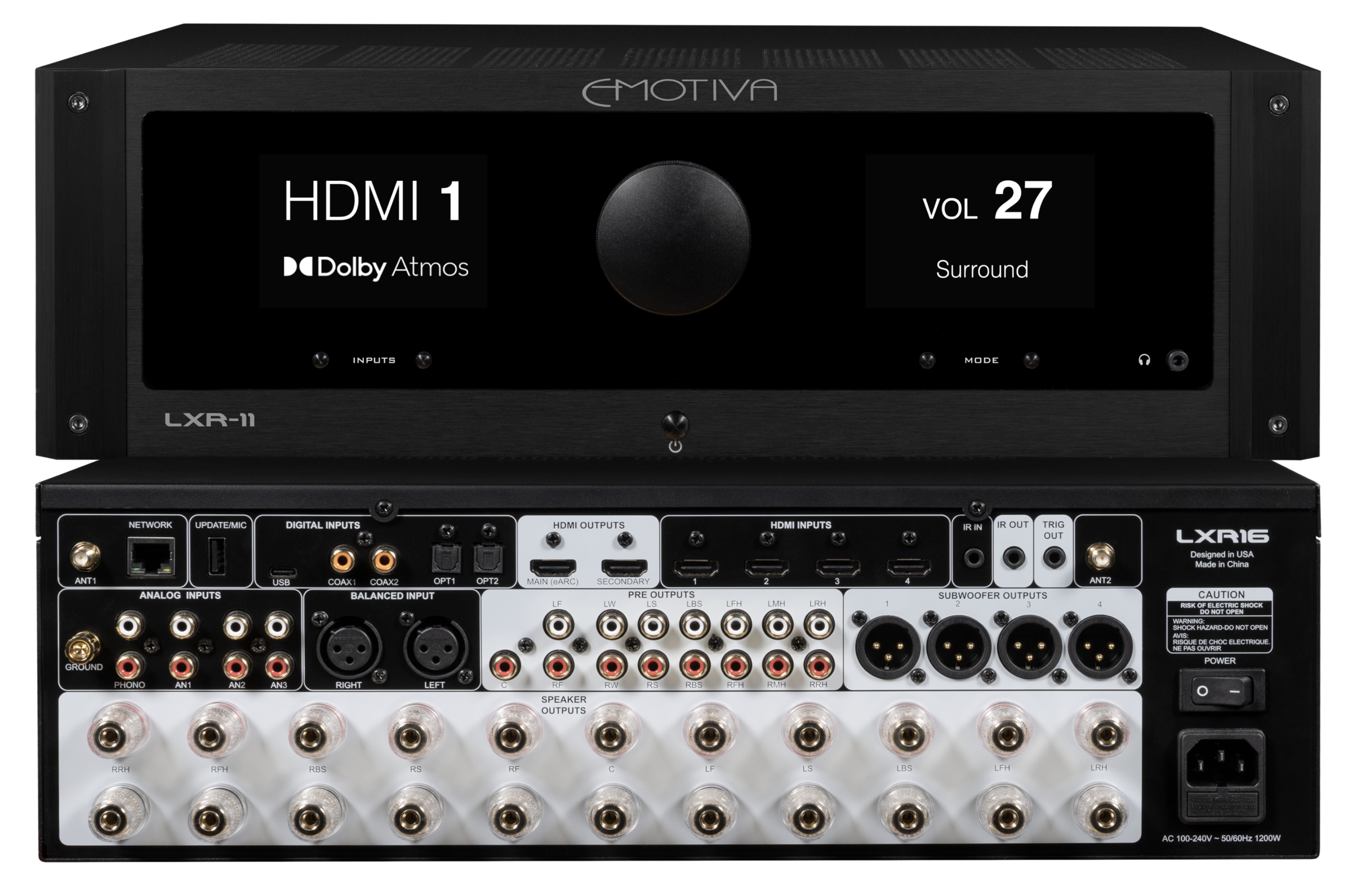
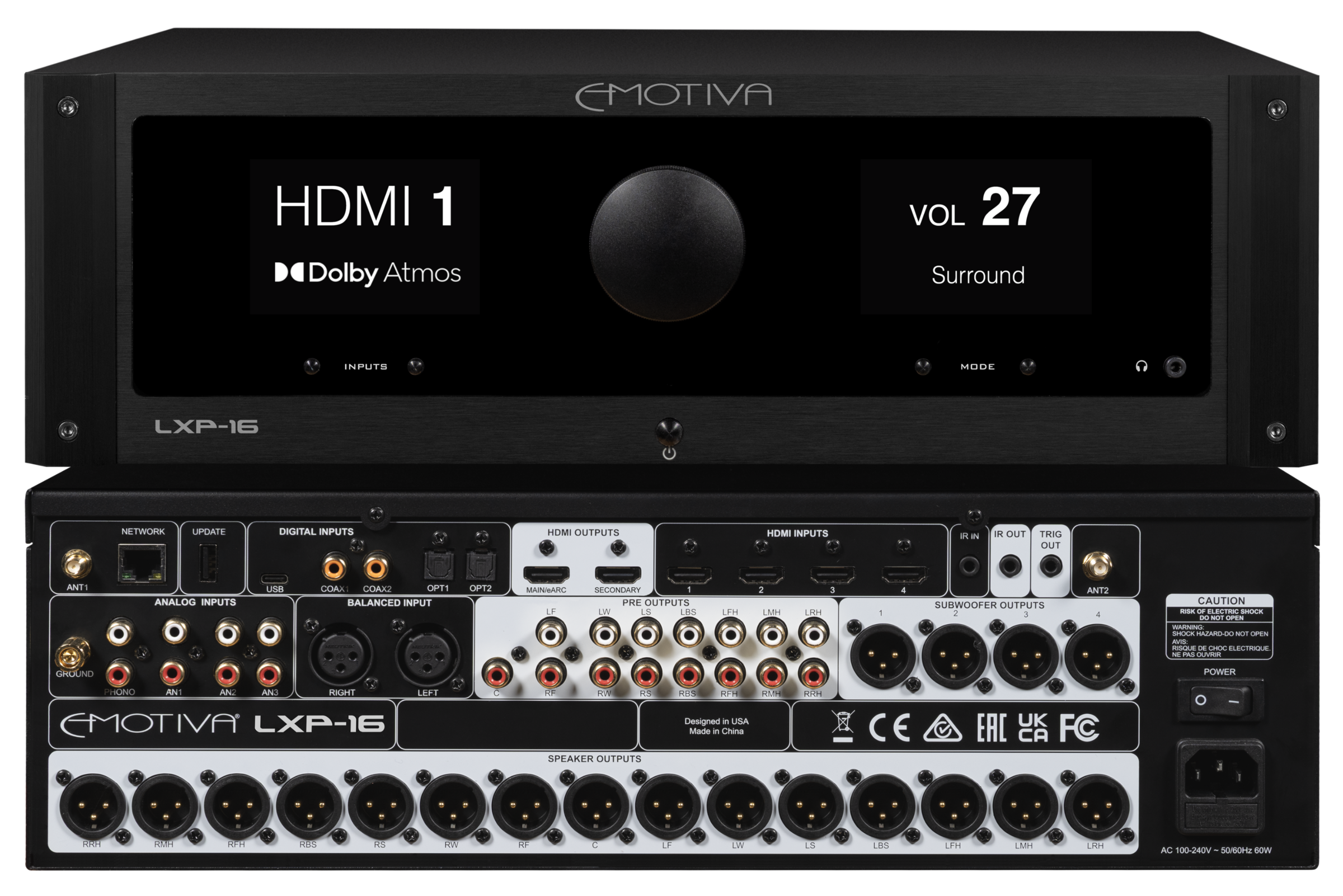
The new LXR-11 Immersive Cinema Receiver and LXP-16 Immersive Cinema Processor include prepaid licenses for Dirac Live Room Correction, Dirac Live Bass Control, and Dirac Live Active Room Treatment, plus a calibrated measurement microphone. Emotiva lists the LXR-11 at $5,999 and the LXP-16 at $4,799. Dirac says both will be available in October 2026; Emotiva’s store currently labels them “Coming Soon.”
Emotiva has offered standard Dirac Live on earlier RMC and XMC processors, but Dirac’s current Emotiva compatibility list shows those products without Bass Control or ART support. The LX models are the first Emotiva components to put all three tools on the same platform.
One platform, two ways to build
Both models process up to 9.4.6 channels: 15 ear-level and height speakers, plus four independently managed subwoofers. They also share four HDMI 2.1 inputs and two outputs, with support for 8K/60, 4K/120, Dolby Vision, HDR10+, VRR, and ALLM. Emotiva’s Emersa streaming platform covers services including TIDAL Connect, Qobuz Connect, and Spotify Connect, along with DLNA, Bluetooth, and USB playback.
The LXR-11 is an all-in-one receiver with 11 fanless Hypex NCoreX amplifier channels. It can run a substantial immersive layout on its own, but a complete 9.4.6 speaker system still requires four channels of external amplification. Its 15 main-channel preamp outputs are RCA, while the four independent subwoofer outputs are balanced XLR.
The LXP-16 is the separates option. It has no speaker amplifiers, but provides both balanced XLR and unbalanced RCA outputs for all 15 main channels, plus four balanced XLR subwoofer outputs. That makes it the more flexible fit for a theater built around external power amps.
Why the full Dirac package matters
Room Correction is only the first layer. It measures the speakers in the room and corrects frequency response and timing toward a chosen target curve. Bass Control then treats multiple subwoofers and their crossover relationships as one system, working to make bass more consistent across the listening area rather than optimizing one seat in isolation.
Active Room Treatment goes further. ART uses the system’s speakers and subwoofers cooperatively to reduce low-frequency resonances and decay; the part of the audible range where the room often dominates what you hear. It does not make physical acoustic treatment obsolete, and it still requires a careful multi-position measurement session, but it can attack problems that ordinary channel-by-channel EQ cannot.
The inclusion also makes the purchase price easier to understand. Dirac currently lists Bass Control and ART as paid upgrades that typically cost $299 each on supported hardware, although licensing varies by device. Bundling the complete suite removes a potential several-hundred-dollar surprise after buying a premium receiver or processor.
Four independent subwoofer outputs are central to that value. They give Bass Control and ART separate channels to measure and manage instead of feeding every sub the same signal. For systems with two to four subwoofers, that is not a spec-sheet flourish; it is the hardware foundation the software needs.
Strong on paper, still waiting for the test bench
The LX platform looks competitive, but these are premium products that have not yet shipped. HDMI switching stability, the Emersa control experience, Dirac calibration workflow, and real multichannel performance will matter more than the launch-day feature list.
Also, four HDMI inputs may be enough for a streamlined system, but it is not generous at this price. And buyers considering the LXR-11 should also budget for an external amplifier if the goal is the full 15-speaker layout.
Still, Emotiva has made a smart call. The headline is not simply 9.4.6 processing or 8K video; it is that the acoustic software needed to exploit four subwoofers is included from day one. If the finished hardware and firmware deliver on the specification, the LXR-11 and LXP-16 could be compelling choices for enthusiasts who want advanced room optimization without turning license shopping into a second purchase decision.