Testing my eyes (and ears): Today’s tech can erase age-related deficit
Yesterday I ordered new glasses from Modern Eye in West Philly. I decided to go all out, cost no object, and get the exact glasses I need (which will arrive in 2-3 weeks). This is after my first year of wearing prescription glasses for presbyopia (age related far-sightedness) in the form of the dedicated readers you see in the attached photo.
While there, I learned that my distance vision still holds up and then some, which is good news for a photographer who reviews displays!
As a 53‑year‑old, I know that my eyes and ears are as subject to the ravages of time as anyone else. I also know that reviewers of AV and audio gear are rarely in the habit of discussing the state of their senses. If you review TVs, how are those eyes? If the subject is audio, your hearing matters. Not for measurements, of course, but for subjective impressions. There’s no way to avoid the influence of age on the senses when consuming media!
Although aging reduces acuity, the effect differs from person to person. For this post I’m thinking about normal hearing, normal vision, and the most common age‑related issues—high‑frequency hearing loss and near‑ or farsightedness.
I’m glad I can’t perceive what I’ve lost in my hearing. Things sound perfectly normal, as they always have. But I can measure it. Smartphone‑based profiling, that aligns with an in‑person audiology exam as a point of reference, shows a high‑frequency cutoff of 13.5 kHz and a slight bass loss in my left ear, possibly the result of years of driving with the window down in cars without air‑conditioning.
Overall my hearing still picks up sparkling details, and headphone compensation doesn’t change the character of the sound much.
I once could hear the tones coming from ultrasonic bird‑repellers; that’s gone, and I make no claim to exceptional hearing.
Yet when I notice individual pixels on a TV or projector from a distance, or spot a subtle resolution difference others miss, I know it’s not my imagination. The new progressive lenses I ordered have no correction on top and are tuned for laptop‑and‑phone distance on the bottom.
Because I know the doctor, he went the extra mile testing my vision, and I learned that I still have better‑than‑20/15 uncorrected distance vision. That includes TV viewing at normal distances. I suspected as much; I’ve spent my life reading distant signs others cannot. I do experience eye strain at phone‑to‑laptop distances, which is why I sought glasses, but when it comes to 4K and 8K displays my eyes are more than up to the task.
The lesson (for me): if the correction your hearing or vision needs is modest, today’s technology can all but erase the deficit.
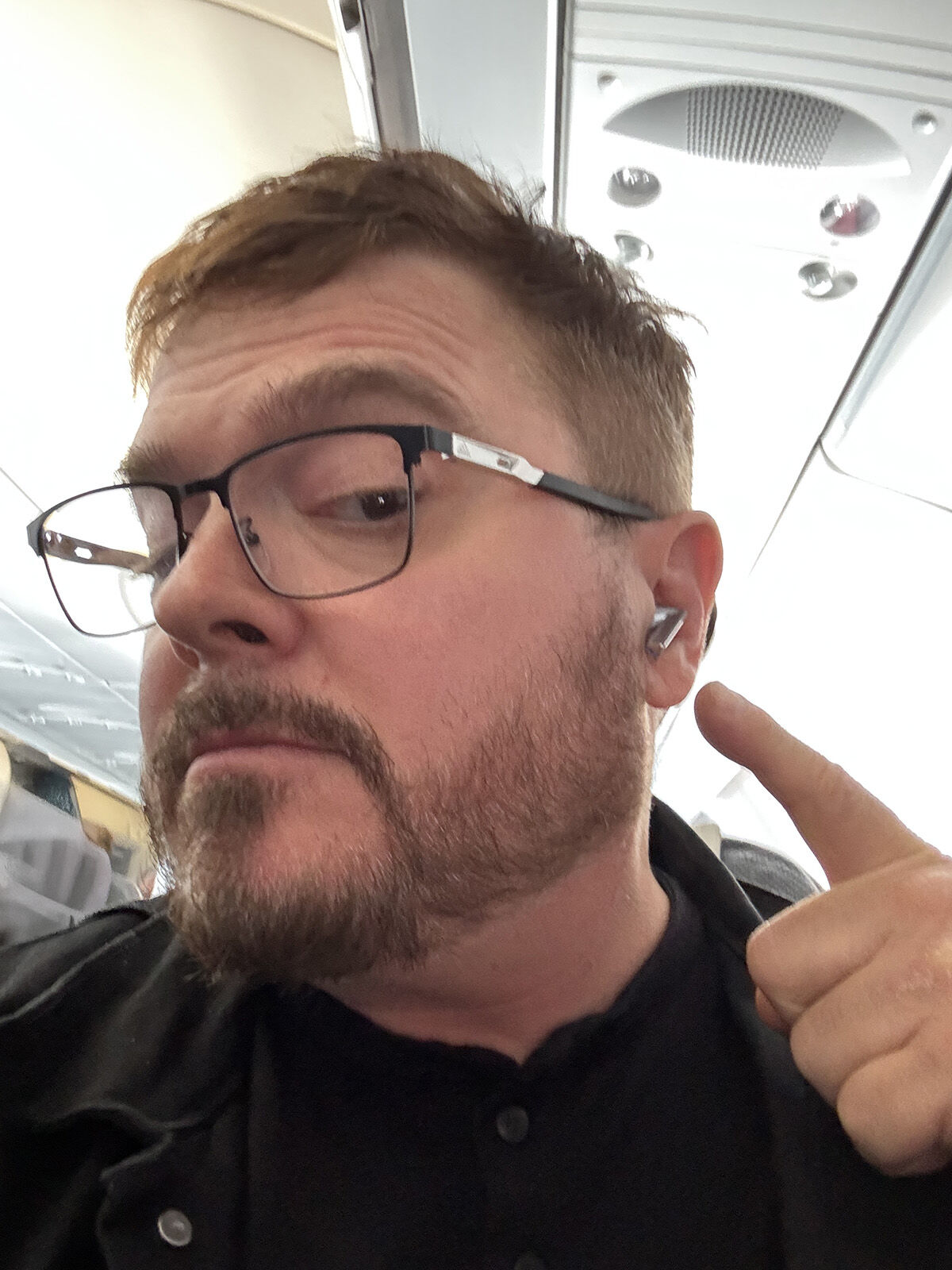
Even with a minor compensation, I appreciate both the audio improvement my Galaxy Buds Pro earbuds provide, and the visual clarity of a well‑done prescription.
As for TVs, it looks like I can keep skipping the glasses altogether. For now.